
English 


Views: 0 Author: Site Editor Publish Time: 2026-05-19 Origin: Site


Drivers buckle up instinctively every time they get behind the wheel. We install rigid car seats for infants. We rely on advanced airbag systems to survive collisions. Yet, many of us let our dogs roam freely across the backseat. This glaring gap in vehicle safety puts everyone at severe risk.
A loose dog creates a massive driving distraction. Worse, sudden braking turns an unrestrained pet into a deadly projectile. A 50-pound dog in a 30-mph crash generates devastating impact forces. This endangers human passengers and almost guarantees fatal injuries for the animal. We must treat canine travel safety as seriously as human travel safety.
You need a reliable containment strategy. Seat protectors might keep mud off your upholstery, but they offer zero crash protection. Seatbelt tethers offer partial restraint but often fail under extreme stress. Ultimately, nothing beats a rigidly constructed, crash-tested Travel Cage. In this guide, you will learn the exact physics of pet travel safety. We will explore vehicle placement strategies and veterinary preparation tips to keep your dog completely secure on the road.
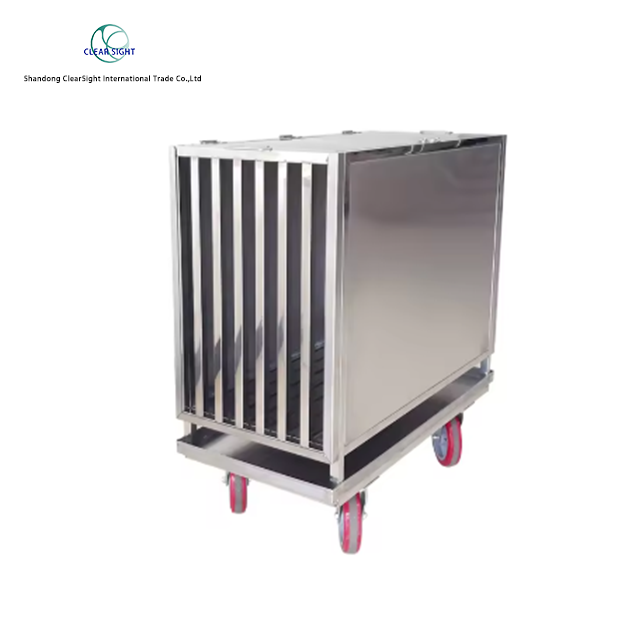
**Restraint is Non-Negotiable:** Unrestrained dogs risk airbag trauma in the front seat, projectile injuries, and post-accident escape.
**Hammocks Are for Dirt, Not Safety:** Seat covers protect upholstery; they offer zero structural protection in a crash.
**The Superiority of the Travel Cage:** A hard-sided, crash-tested travel cage provides the highest level of impact protection and containment.
**Avoid Wire Crates in Cars:** Collapsible wire crates can crumple upon impact, posing severe puncture risks.
**Strategic Placement:** Small cages go in the backseat; large cages go in the cargo area (requiring heavy-duty reinforcement due to vehicle crumple zones).
Allowing a dog to sit loose in a moving vehicle ignores basic physics. You might drive carefully, but you cannot control other drivers. When you evaluate the risks, an unrestrained dog presents four distinct dangers.
Physics dictates how objects behave during sudden deceleration. Force equals mass times acceleration. In a 30-mph crash, an unrestrained 50-pound dog becomes a 1,500-pound projectile. They will launch forward. They will strike the windshield, the dashboard, or the human passengers. This mathematical reality proves why you can never leave a dog loose. The resulting impact force often proves fatal to both the animal and the people inside the cabin.
You should never let your dog sit in the front passenger seat. Automotive engineers calibrate passenger airbags for adult human weight and height. These devices deploy at speeds exceeding 200 mph. If a dog sits in the front seat during a collision, the airbag deployment strikes them directly. The sheer explosive force causes catastrophic blunt force trauma to a dog's head and chest.
Accidents introduce a secondary, often overlooked danger. Surviving the initial impact is only half the battle. Collisions shatter windows and pop doors open. The violent noise and motion severely traumatize dogs. Frightened animals operate on pure instinct. They often bolt through broken windows directly into oncoming traffic. A contained dog cannot run away. Proper restraint keeps them safely inside the vehicle until first responders arrive.
Wandering dogs cause preventable accidents. A dog climbing into your lap or pacing across the backseat pulls your eyes away from the road. Taking your eyes off the highway for just two seconds doubles your crash risk. Keeping your dog securely confined eliminates this distraction completely. You can focus entirely on driving.
Pet owners face a confusing market full of supposed safety devices. You need to distinguish between cosmetic accessories and true safety equipment. Here is a breakdown of the three main approaches.
Many owners buy backseat hammocks thinking they provide a safe barrier. This assumption is dangerous.
Verdict: Purely cosmetic.
Function: Excellent for catching hair, drool, and mud.
Flaw: They provide zero restraint or impact absorption. A hammock will simply tear or launch the dog forward during a severe crash.
Harnesses connect your dog directly to the vehicle's seatbelt system. They represent a step up from hammocks.
Verdict: Better than nothing, but highly variable in quality.
Risks: Many market options fail independent crash testing. The stitching rips under high forces. Furthermore, you must never attach a seatbelt tether to a standard neck collar. Doing so risks severe neck trauma or decapitation. You must use a heavy-duty, crash-tested chest harness.
For maximum security, rigid containment wins. A premium, heavy-duty enclosure absorbs force and shields the animal.
Verdict: The ultimate choice for safety and isolation.
Why it wins: It completely encloses the dog. It prevents all driver distraction. A sturdy structure shields against side impacts. Most importantly, a high-quality Travel Cage guarantees containment after a crash, preventing highway escapes.
Restraint Effectiveness Chart
Restraint Type | Distraction Prevention | Impact Protection | Post-Crash Containment | Primary Use Case |
|---|---|---|---|---|
Hammock | Low | None | None | Keeping car clean |
Tether Harness | Medium | Moderate (if crash-tested) | Low (often chewable) | Budget-conscious safety |
Hard-Sided Travel Cage | High | Maximum | Maximum | Optimal road trip safety |
Not all enclosures provide equal protection. A cheap plastic carrier might survive a trip to the vet, but it will shatter during a highway collision. You must evaluate specific criteria before making a purchase.
Look for products certified by independent bodies like the Center for Pet Safety (CPS). Generic safety claims by manufacturers mean very little. The pet products industry lacks strict federal regulation. Manufacturers can label a product "crash-tested" even if the product failed the test. Always verify certifications through independent databases before buying.
You must strictly avoid collapsible wire crates for car travel. Wire crates are designed for home training. During a crash, thin wire easily crumples and splinters. The broken metal rods pose severe puncture risks to your dog. Instead, you need a Travel Cage made of rotomolded plastic or double-walled aluminum. These materials absorb impact energy without shattering.
Buying an oversized enclosure actually decreases safety. You might want to give your dog plenty of stretching room, but physics punishes this decision.
Rule of thumb: The enclosure should only be large enough for the dog to stand, turn around comfortably, and lie down.
The physics factor: Too much extra room allows the dog to build momentum during sudden braking. This increases the velocity at which they hit the inside wall of the enclosure.
Measurement strategy: Measure your dog from nose to the base of the tail, and from the floor to the top of their head. Add two inches to these dimensions to find the perfect fit.
A closed vehicle environment gets hot quickly. Ensure your chosen enclosure features ample cross-ventilation. Proper airflow regulates your dog's body temperature. Additionally, look for a model featuring a sealed, leak-proof base. Stress or motion sickness often leads to vomiting or urination. A sealed base contains these messes, protecting your vehicle interior and keeping the dog as comfortable as possible.
Premium safety equipment costs money upfront. Frame a high-quality, crash-tested enclosure as a one-time, lifetime investment. Cheap plastic crates crack under normal use and require frequent replacement. More importantly, the upfront cost pales in comparison to the catastrophic veterinary bills resulting from a serious car accident.
Best Practices vs. Common Mistakes
Best Practice: Anchor the enclosure securely using heavy-duty ratchet straps.
Common Mistake: Relying on bungee cords to tie down a heavy crate. Bungee cords snap under collision forces.
Best Practice: Remove your dog's collar and leash before placing them inside.
Common Mistake: Leaving a leash attached. It can easily tangle around a paw or neck during a rough ride.
Where you place the enclosure matters just as much as its structural integrity. Different vehicles and dog sizes dictate different placement strategies.
The backseat is the safest place for smaller breeds. Placing them here keeps them within the vehicle's primary safety cabin. This area receives the most structural protection from automotive engineers.
However, you cannot simply place the box on the seat. You must anchor it down securely. Use the vehicle's built-in seatbelt system or the LATCH child-seat anchors. Threading the seatbelt through the manufacturer-designated anchor points prevents the entire structure from becoming a heavy projectile during a crash.
Large breeds require big enclosures. These units rarely fit in standard backseats. You must place them in the cargo spaces of SUVs, hatchbacks, or station wagons. This strategy requires special caution.
The Crumple Zone Warning: Automotive engineers design the rear cargo area to crush inward. This crumple zone absorbs rear-end impact energy to protect human passengers in the front and back rows. Because your dog sits inside this crush zone, their Travel Cage must be of the absolute highest structural grade. Standard plastic will shatter when the trunk compresses. You must use heavy-duty rotomolded plastic or reinforced aluminum. Finally, secure the unit tightly to the floor cargo hooks using high-strength tie-down straps.
Placement Guidelines Table
Dog Size | Ideal Location | Anchoring Method | Key Consideration |
|---|---|---|---|
Small (< 20 lbs) | Rear passenger seat | LATCH system or Seatbelt | Ensure seatbelt locks fully |
Medium (20-50 lbs) | Rear passenger seat | Seatbelt routing loops | Level the seat slope with towels if needed |
Large (50+ lbs) | Rear Cargo Area | Heavy-duty floor ratchet straps | Requires extreme crush-resistant construction |
Physical restraints only address physical safety. You must also manage your dog's internal health and psychological well-being. A stressed, nauseous dog makes travel miserable for everyone.
Always bring tap water from your own home in large jugs. Many owners fail to realize local water mineral content changes drastically from city to city. Sudden changes in water chemistry frequently disrupt canine gut flora. This causes gastrointestinal upset, loose stools, and diarrhea during trips. Stick to the water they know.
You must actively prevent car sickness. Feed your dog their main meal roughly three to four hours before departure. This gives their stomach enough time to empty. A full stomach in a rolling vehicle acts like a washing machine. Most importantly, never feed them a full meal in a moving vehicle. Save small, high-value treats for rest stops only.
Some dogs suffer from severe travel anxiety. They pant, pace, drool, or bark endlessly. You can manage this through several progressive steps.
Mild Anxiety: Try physical pressure wraps like a Thundershirt. These garments provide gentle, constant pressure similar to swaddling a baby. You can also spray dog-appeasing pheromones (like Adaptil) onto their bedding ten minutes before loading them in.
Severe Anxiety: Consult your veterinarian for prescription medication. Vets commonly prescribe Trazodone or Gabapentin to induce calmness.
Crucial Implementation Step: Never give your dog a new medication for the first time on travel day. Always conduct a "dry run" at home several days prior. Give them the pill and observe their behavior for a few hours. Some dogs experience paradoxical reactions, becoming hyperactive instead of sleepy. You need to identify adverse side effects while safely at home, not three hours down the interstate.
There are many ways to transport a dog, but convenience should never eclipse safety. Unrestrained dogs present an unacceptable risk to themselves and the humans riding alongside them. Seat covers and cheap wire crates fail instantly under the brutal physics of a car crash.
Utilizing a properly sized, crash-tested Travel Cage secured in the appropriate zone of the vehicle remains the only evidence-backed method to protect everyone. It isolates the dog, prevents distraction, and provides life-saving structural armor.
Your next steps are clear. Measure your dog accurately today. Inspect your vehicle's backseat and cargo area for solid anchor points. Cross-reference any potential purchases with independent crash-test databases like the Center for Pet Safety. Investing in proper containment guarantees peace of mind on every single road trip.
A: You should limit total travel time to around 7 hours a day. Schedule mandatory stops every 2 to 4 hours. These breaks allow your dog to stretch their legs, hydrate properly, and relieve themselves. Consistent breaks prevent joint stiffness and mental fatigue.
A: It is highly discouraged during daytime hours due to fatigue and joint stiffness. If unavoidable, you should drive overnight when the dog's natural circadian rhythm promotes extended sleep. Even then, you still need to provide frequent, short breaks.
A: Ensure the enclosure has a leak-proof base. Fast your dog 3 to 4 hours before travel. Keep the car cool and well-ventilated, ideally with a cracked window for fresh air. If it remains a chronic issue, consult a vet for canine-specific anti-nausea medication.
A: Absolutely never. It exposes the dog to extreme weather, flying road debris, and fatal ejection during sudden stops or turns. Dogs in trucks must ride inside the cabin securely fastened in a rigid enclosure or a crash-tested harness.


