
English 


Views: 0 Author: Site Editor Publish Time: 2026-11-03 Origin: Site


Picture the morning rush at a busy animal hospital. Technicians juggle post-op monitoring, boarding drop-offs, and emergency intakes simultaneously. In this high-stakes environment, equipment failure is simply not an option. Housing units serve as the heartbeat of patient recovery. They are the highly controlled spaces where animals wake up from anesthesia, receive critical care, and safely wait for their owners.
Yet, poorly designed or low-quality animal enclosures frequently create severe operational bottlenecks. Substandard setups inevitably lead to compromised hygiene, accidental animal escapes, and rapid rust formation. Ultimately, they become a massive drain on your capital budget. When these enclosures fail structurally, patient safety is directly put at risk. How can a modern clinic avoid these costly pitfalls?
The ultimate solution to these daily clinical frustrations is investing in a high-quality veterinary cage bank. However, selecting the right housing system requires a systematic, evidence-based engineering approach rather than simply defaulting to the lowest price tag. This comprehensive guide details the essential technical checks you must make before purchasing. Following these standards ensures maximum durability, optimal patient safety, and a strong return on investment.
Material is King: Always prioritize 304-grade stainless steel for your housing units to prevent rust, resist harsh chemicals, and ensure decades of structural longevity.
Size and Modularity Matter: Choose modular systems that accommodate varying patient sizes and seamlessly fit your specific clinic floor layout.
Safety First: Secure, one-handed latch mechanisms are absolutely non-negotiable to prevent clever animal escapes and ensure veterinary staff safety.
Hygiene is Essential: Seamless interior designs, proper fluid drainage, and removable waste trays drastically reduce daily cleaning time and prevent cross-contamination.
Mobility Adds Value: Heavy-duty polyurethane locking casters allow staff to easily rearrange units and perform rigorous deep cleaning of the ward floor.
A veterinary cage bank is a modular, multi-tiered housing system specifically engineered for commercial use in veterinary clinics, animal hospitals, and rescue shelters. Unlike standalone pet crates, these clinical-grade banks are designed to be stacked and bolted into a unified, highly stable structure. This vertical integration maximizes limited floor space while providing secure, individualized enclosures for multiple animals simultaneously.
The primary purpose of these systems spans across several critical clinical functions. They provide an easily monitorable environment for pets waking up from sedation. Furthermore, they are heavily utilized for standard medical boarding, intensive care observation, and the strict isolation of patients carrying infectious diseases.
Veterinary medicine is currently undergoing a massive operational shift. The industry trend heavily favors fear-free and stress-reducing clinic environments. Consequently, modern clinical housing is evolving rapidly beyond mere containment. Today's advanced enclosures are integral to minimizing patient anxiety through superior acoustic control, specialized vibration dampening, and tailored visual barriers. As technology advances, the baseline standard for animal housing has decisively shifted from basic galvanized crates to sophisticated, modular recovery ecosystems.
The impact of implementing the right housing system on your daily workflow cannot be overstated. A well-engineered unit improves staff efficiency by simplifying strict cleaning protocols and making patient handling significantly safer. From a business perspective, a pristine, high-quality stainless steel setup elevates the professional appearance of your clinic. This instills immediate trust in pet owners who tour your facility.
Material composition remains the single most critical factor when selecting clinical housing. The veterinary environment is notoriously harsh on metals. Daily, these enclosures are exposed to highly acidic animal urine, feces, and aggressive chemical disinfectants like bleach or quaternary ammonium compounds.
When evaluating your options, investing in a 304 stainless steel veterinary cage bank ensures maximum resistance to these corrosive elements. Type 304 stainless steel contains 18 percent chromium and 8 percent nickel. This specific alloy ratio forms a passive protective oxide layer that actively prevents chemical penetration and rust. In stark contrast, cheaper alternatives like 201 stainless steel or galvanized steel have significantly lower nickel content. While they may look identical and shiny on day one, 201 stainless steel will inevitably pit, corrode, and rust within just a few years of clinical use. This creates porous surfaces that harbor dangerous bacteria.
To clearly illustrate the engineering differences, review the material comparison below.
Material Type | Corrosion Resistance | Structural Lifespan | Clinical Application Suitability |
|---|---|---|---|
304 Stainless Steel | Excellent. Resists highly acidic urine and harsh chemical disinfectants. | 20+ Years | Ideal for all veterinary wards, ICUs, and surgical recovery. |
201 Stainless Steel | Poor. Highly susceptible to pitting and rust in moist environments. | 2 to 5 Years | Not recommended. Prone to bacterial buildup in rusted pores. |
Galvanized Steel | Moderate initially, but degrades rapidly once the zinc coating scratches. | 3 to 7 Years | Acceptable for dry boarding, but unsuitable for wet clinical use. |
Beyond the chemical composition of the steel, the structural integrity of the unit relies heavily on the metal gauge. The gauge dictates the exact thickness of the steel walls. Think about the physical impact of a 100-pound, highly anxious German Shepherd throwing its weight against the enclosure doors. A lower gauge number indicates thicker, stronger steel. Industry-standard clinical enclosures typically utilize 18-gauge or 20-gauge steel for the main body. This precise thickness ensures the walls will not dent, warp, or buckle under immense pressure.
In addition, a noisy clinic dramatically increases anxiety and delays healing in recovering patients. The loud metallic gong sound of cheaper enclosures closing can easily startle sedated animals. Premium stainless steel enclosures incorporate advanced sound-dampening technology. Manufacturers achieve this by applying specialized vibration-absorbing materials to the exterior panels. This thoughtful acoustic engineering keeps the recovery ward significantly calmer.
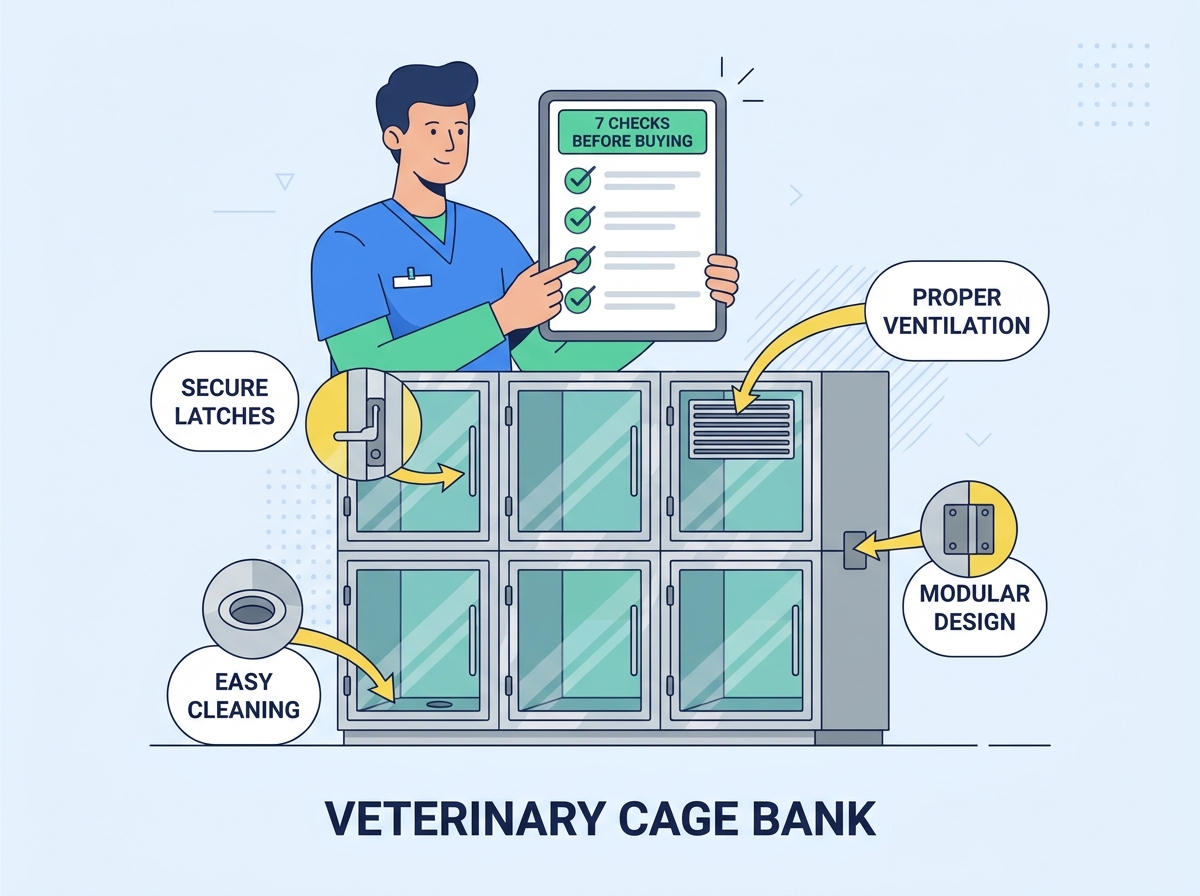
A functional, high-volume practice must be prepared to treat a tiny Chihuahua in the morning and a massive Great Dane by the afternoon. Consequently, your housing system must offer a strategic mix of small, medium, and large enclosures within a single cohesive bank. Modular designs allow you to intelligently stack smaller units at eye level for cats and toy breeds. Meanwhile, larger and heavier enclosures remain strictly at floor level. This arrangement ensures structural stability and provides safe access for large, mobility-impaired breeds.
One of the most valuable space-saving features in modern clinical housing is the removable divider system. Large bottom enclosures equipped with a heavy-duty, slide-out central partition allow staff to instantly convert two medium-sized spaces into one massive recovery suite. This flexibility is indispensable when housing giant breeds, keeping bonded animal pairs together, or providing extra square footage for a patient requiring bulky orthopedic recovery equipment.
Before finalizing any purchase, meticulously measure your clinic floor space. You must ensure the layout allows for proper staff walkways. Typically, a ward requires at least 48 to 60 inches of clearance in front of the housing bank. This specific distance ensures the lower doors can swing open fully without blocking the aisle. Always consider the swing radius of the doors to prevent obstructing high-traffic treatment areas or emergency exits.
Veterinary technicians and nurses rarely have two free hands. Imagine a scenario where a tech holds a wriggling, frightened cat in one arm while managing a tangled IV fluid line with the other. Because of these daily realities, latches must be ergonomically designed for smooth, effortless one-handed operation. A high-quality latch allows a staff member to securely close and lock the door using only their forearm or a single finger. This streamlines the workflow and prevents accidental patient drops.
Animals, particularly agile cats and intelligent working dog breeds, can be incredibly clever escape artists. Standard slide-bolt latches are easily manipulated by a determined paw. To combat this, look for heavy-duty, tamper-proof latch mechanisms. These designs require a highly specific lifting and turning motion to open. Gravity-assisted or spring-loaded latches ensure that even the most determined patient cannot manipulate the lock from the inside.
Furthermore, the doors on commercial stainless steel enclosures carry significant weight. Over time, constant opening and closing will cause weak hinges to sag. This causes the door to misalign with the latch frame, compromising security and making the enclosure incredibly frustrating to close. Carefully inspect the hinges to ensure they are reinforced and heavy-duty. Ideally, hinges should be fully welded directly to the frame rather than attached with standard screws that easily strip out over years of use.
Infection control is the absolute top priority in any veterinary setting. Traditional enclosures built with sharp, 90-degree interior corners act as magnets for hair, bodily fluids, and dangerous pathogens like Parvovirus. Premium units feature rounded, seamless interior corners. This swooping design completely eliminates tight crevices where bacteria can hide. It allows staff to wipe down and thoroughly disinfect the entire interior swiftly and effectively.
Post-operative patients or animals suffering from severe gastrointestinal issues will frequently soil their enclosures. Elevated floor grates are essential to keep recovering pets suspended safely above their own waste. Directly beneath these grates, slide-out liquid collection trays catch urine, vomit, and spilled water. A professionally engineered modular veterinary cage system integrates these components seamlessly. This ensures the patient remains dry and comfortable, which significantly reduces the risk of painful urine scalding and surgical wound contamination.
To further enhance ward hygiene, look for units featuring a liquid retaining lip along the front edge. This slight, raised elevation acts as a barrier. It prevents urine or spilled water from leaking out of the enclosure and dripping onto the clinic floor, or worse, seeping into the enclosures located on the lower tiers.
The design of the enclosure door plays a critical dual role in both safety and ventilation. The spacing between the metal bars must be carefully and precisely calibrated. The gaps must be narrow enough to prevent small paws, jaws, or heads from getting stuck, which could lead to severe frantic injury. Simultaneously, the spacing must remain wide enough to allow for maximum airflow, proper ambient ventilation, and clear visibility for staff monitoring the patients from across the room.
For emergency hospitals and intensive care units, standard barred doors are often insufficient for critical cases. Check if the manufacturer offers easily interchangeable doors. The ability to quickly swap a standard barred door for a clear, sealed acrylic oxygen therapy door allows your team to instantly convert a standard recovery space into a life-saving, oxygen-enriched environment.
While stainless steel is highly hygienic, it naturally maintains a neutral and sometimes cold temperature. Post-operative patients frequently struggle to regulate their body heat as they wake from anesthesia. Ensure the internal dimensions can easily accommodate standard veterinary heated pads or forced-air warming blankets. Some advanced systems even offer built-in portals to safely route electrical cords out of the animal reach.
A fully loaded, stationary housing unit traps dust, shedding hair, and rogue fluids underneath and behind it. This slowly creates a hidden biohazard over time. A professional, clinical-grade system should always come mounted on a wheeled base featuring heavy-duty, non-marring polyurethane casters. These robust wheels allow a single staff member to effortlessly roll the entire bank away from the wall for rigorous deep cleaning. Ensure the casters feature strong, foot-operated locking mechanisms to keep the unit strictly stationary when patients are inside.
When planning your purchase, carefully consider the installation process and long-term structural integrity. Flat-packed enclosures require complex, time-consuming assembly at the clinic and rely heavily on screws and bolts. Due to constant animal movement and vibration, these bolted connections can loosen over time. Fully welded enclosures, shipped pre-assembled, are generally far superior for commercial environments. They offer unmatched structural rigidity, completely eliminate the risk of frustrating assembly errors, and are ready for immediate clinical use upon delivery.
A reputable manufacturer stands firmly behind their engineering and material choices. Before finalizing a purchase order, carefully review the fine print of the warranty terms. Look for comprehensive coverage that specifically protects against structural weld failures, latch malfunctions, and rust formation. A strong, multi-year warranty is a direct, reliable indicator of the grade of stainless steel utilized in the manufacturing process.
Even the most durable, premium equipment experiences wear and tear over decades of heavy clinical use. Ensure the manufacturer maintains a reliable, fast-shipping supply chain for replacement parts. You should be able to easily order replacement floor grates, plastic waste collection trays, hinges, or casters without having to scrap and replace the entire housing unit.
From a financial standpoint, clinic owners must look beyond the initial sticker price. While premium stainless steel animal housing requires a higher upfront capital expenditure compared to 201 steel or galvanized options, it will easily outlast those cheaper alternatives by decades. When you factor in the massive reduction in replacement costs, minimal maintenance time, and significantly improved patient safety, the long-term total cost of ownership heavily favors the premium investment.
Choosing the right housing unit requires careful, methodical evaluation of your clinic daily operations. By rigorously checking the material quality, size modularity, security features, and hygiene enhancements, you actively safeguard your patients and your staff. Furthermore, assessing ventilation capabilities, unit mobility, and warranty coverage ensures you are making a sound, data-driven financial decision.
A premium housing system dramatically improves clinic efficiency and the overall standard of care you provide. It is not just a standard purchase; it is a smart, long-term operational investment that pays dividends in workflow optimization and peace of mind. Ready to upgrade your clinic housing infrastructure? Explore top-tier, durable options from Clearsight today to protect your patients and elevate your practice.
304-grade stainless steel is the undisputed industry gold standard. It is highly durable, completely rust-proof, and easily withstands the harsh, acidic veterinary-grade disinfectants required for proper, rigorous infection control.
Yes, most high-quality veterinary housing systems are modular by design. You can stack different sizes to perfectly suit your clinic specific patient demographics and available floor space. For example, you can place small enclosures on top and large enclosures with removable dividers on the bottom.
If you purchase true 304 stainless steel, rust is highly unlikely to occur. However, to maintain the pristine finish, always clean with appropriate non-abrasive veterinary cleaners. Strictly avoid using steel wool or allowing bleach-heavy solutions to sit for long periods, as these aggressive practices can strip the steel protective chromium layer.
Yes, floor grates are highly recommended for clinical environments. They elevate the animal safely above their own waste and spilled water, keeping patients clean and dry. This separation is especially critical for post-surgery recovery to prevent wound infections and painful urine scalding.
Costs vary widely based on the overall footprint, material grade, and added specialty features like oxygen doors. While budget-friendly options exist on the market, investing in a commercial-grade 304 stainless steel system ensures you will not need to replace them every few years. This ultimately saves your practice significant money in the long run.
A well-equipped ward requires a diverse mix of sizes. A standard configuration usually includes 24-inch wide units for cats and toy breeds, 36-inch units for medium dogs, and 48-inch or 60-inch double-door units for large breeds. Utilizing removable dividers in the larger bottom units provides the best operational flexibility.
Loud noises trigger stress responses in animals, elevating their heart rates and delaying the healing process. Sound-dampening cages utilize specialized exterior coatings and double-walled construction to absorb vibrations and eliminate loud metallic echoing. This engineering creates a quieter, calmer environment that is essential for smooth post-operative recovery.


