
English 


Views: 0 Author: Site Editor Publish Time: 2026-11-03 Origin: Site


Picture a chaotic Tuesday evening at your emergency clinic. A frantic owner rushes in. Their Maine Coon is in severe respiratory distress, gasping for air and visibly panicking. In these demanding environments, every single second counts. Treating hypoxic or critically ill animals leaves a margin for error that is virtually nonexistent. Veterinary professionals understand that stabilizing these fragile patients requires more than just medical expertise. It demands reliable, precision-engineered equipment.
Historically, clinics have struggled to stabilize dyspneic animals safely. Traditional methods involve cumbersome equipment requiring physical restraint. This inadvertently induces panic, increases the patient's oxygen consumption, and exacerbates their condition. The solution to this critical issue is the Veterinary ICU Oxygen Cage, universally recognized as the gold standard for intensive veterinary care. By providing a highly controlled, stress-free microclimate that precisely regulates oxygen concentration, ambient temperature, and relative humidity, these specialized units allow patients to rest. They stabilize without the anxiety associated with masks or nasal cannulas.
This comprehensive guide is designed specifically for clinic owners, veterinarians, and veterinary technicians. Throughout this article, we will walk you through the essential empirical criteria for selecting, setting up, and maintaining the ideal intensive care unit for your practice. This ensures your clinical team is always prepared to handle life-threatening emergencies with unwavering confidence.
Key Takeaways
Material Matters: Choosing equipment constructed from premium 304 stainless steel ensures long-term durability, optimal hygiene, and strict rust resistance in high-use clinical settings.
Precision Control: Top-tier units offer automated regulation over oxygen concentration, temperature, and relative humidity. This is vital for accommodating shifting physiological needs.
Proper Setup is Crucial: Correct calibration of oxygen flow and strategic clinic placement prevent gas leaks and ensure immediate operational readiness.
Maintenance Extends Lifespan: Strict daily cleaning protocols and routine sensor maintenance not only prevent nosocomial infections but also protect your capital equipment investment.
Scalability: Multi-compartment configurations allow busy veterinary hospitals to treat multiple patients of different sizes and species simultaneously. You achieve this without compromising limited floor space.
A veterinary intensive care unit is a specialized, fully enclosed medical incubator. Engineers design these specifically to deliver concentrated oxygen therapy while simultaneously regulating internal temperature and humidity levels. Unlike standard wire holding cages, these units create a sealed, highly controlled microclimate. They utilize integrated digital sensors, medical gas delivery ports, and climate control mechanisms to maintain specific environmental parameters prescribed by the attending veterinarian.
Recent industry analyses reveal a distinct paradigm shift in critical care equipment across the veterinary sector. Modern hospitals are increasingly moving away from traditional, manual oxygen therapies toward fully automated microclimates. Market trends highlight a growing emphasis on Fear Free handling principles alongside the clinical necessity to reduce patient manipulation. As veterinary medicine advances, pet owners expect human-grade intensive care standards in animal hospitals. This surge in expectations makes automated, hands-off recovery environments a standard operational requirement rather than a luxury.
The clinical indications for utilizing this equipment are extensive and critical. Patients presenting with congestive heart failure, feline asthma, severe pneumonia, pulmonary contusions from blunt force trauma, or systemic shock require immediate, aggressive oxygen supplementation. Furthermore, post-surgical patients recovering from prolonged anesthesia benefit significantly from a warm, oxygen-rich environment. This proactive care prevents hypothermia and hypoxemia.
When compared to traditional oxygen delivery methods, the advantages of an enclosed cage are undeniable. Flow-by oxygen wastes a significant amount of expensive medical gas and requires continuous manual application by a busy veterinary technician. Oxygen masks often induce severe combativeness in dyspneic animals. In contrast, the enclosed cage eliminates the need for physical restraint altogether. The patient can lie down in a natural resting posture, allowing their respiratory rate to normalize while receiving a steady, reliable fraction of inspired oxygen.
Feature | Traditional Oxygen Therapy | Automated ICU Oxygen Cage |
|---|---|---|
Patient Stress Level | High due to restraint and facial masks | Very Low with hands-off environment |
Oxygen Efficiency | Poor gas retention leading to high waste | Excellent retention in a sealed microclimate |
Climate Control | None available | Automated heating, cooling, and dehumidification |
Staff Involvement | Requires continuous manual monitoring | Set-and-forget parameters free up technicians |
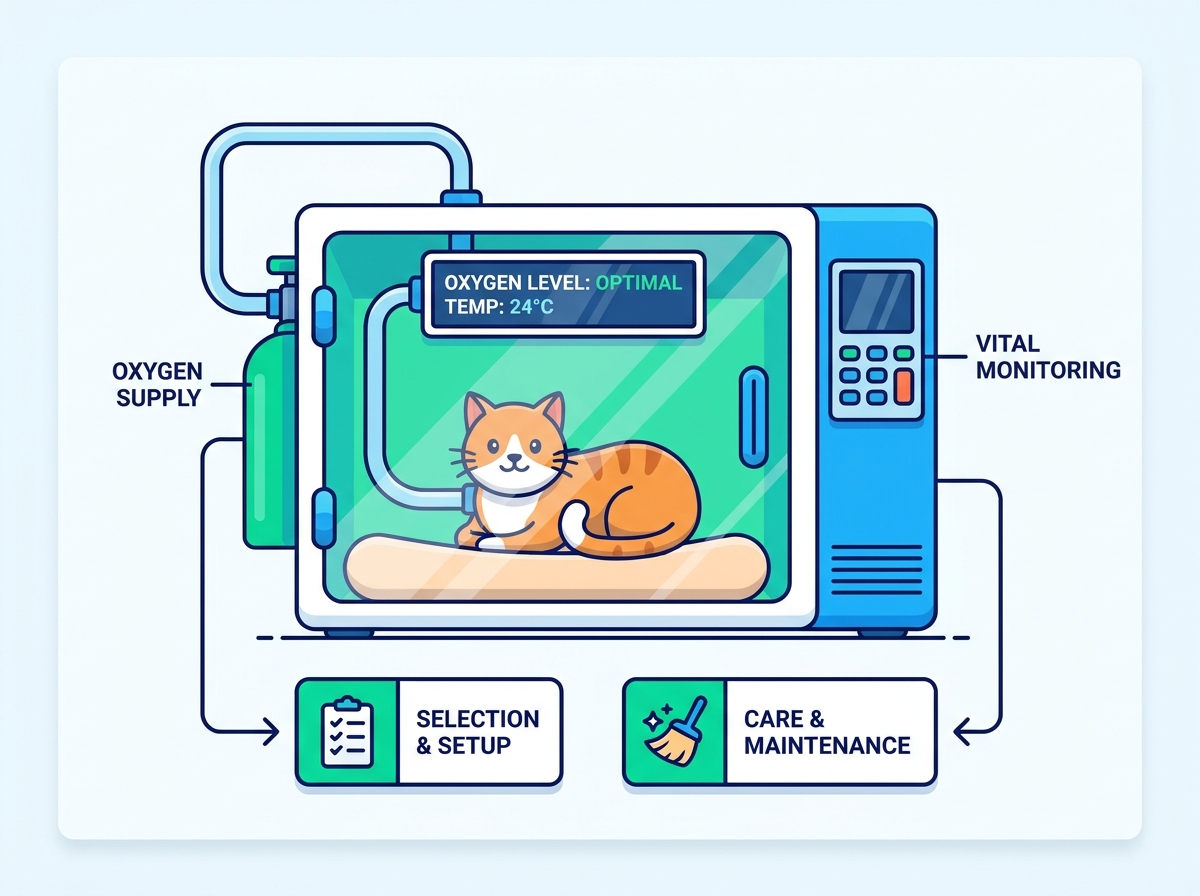
Evaluating medical equipment requires a systematic, engineering-minded approach. Clinic owners and procurement managers must assess several technical specifications. You need to ensure the chosen unit meets both rigorous clinical demands and stringent safety standards.
The primary material of the enclosure directly dictates its operational lifespan and sanitary capabilities. Veterinary environments are inherently harsh. Daily operations expose equipment to acidic animal urine, high humidity, and aggressive chemical disinfectants. Industry standards strongly favor 304 stainless steel due to its specific metallurgical properties, providing exceptional resistance to corrosion. Investing in a unit built from premium 304 stainless steel guarantees a non-porous surface. This prevents bacterial harboring within microscopic scratches, mitigating the risk of cross-contamination between highly vulnerable patients.
Beyond simply delivering gas, therapeutic efficacy relies heavily on precise environmental manipulation. Advanced units feature intuitive digital interfaces allowing technicians to set exact oxygen concentration levels, typically ranging from 30 percent to 60 percent. Integrated heating and cooling systems are absolutely critical. Hypothermic trauma patients require active, gentle warming via Positive Temperature Coefficient heating elements. Conversely, animals suffering from heatstroke or fever may require active cooling. Automated systems that continuously monitor and adjust these parameters without manual intervention drastically reduce the margin for human error.
Continuous patient monitoring remains a fundamental requirement in intensive care, yet physical handling must be minimized. Heavy-duty, transparent acrylic or tempered glass doors serve as essential components of a functional unit. These transparent barriers allow veterinary staff to observe the patient's respiratory effort, mucous membrane color, and overall demeanor from across the treatment room. Because opening the door rapidly depletes the internal oxygen concentration, clear visibility ensures visual assessments occur continuously while preserving the delicate internal microclimate.
In critical care, undetected equipment failure quickly leads to fatal outcomes. High-quality cages incorporate comprehensive safety alarm systems acting as a failsafe during busy clinical shifts. These include visual and audible alerts for temperature deviations, oxygen supply depletion, and power failures. Backup ventilation valves are a standard safety feature. In the event of a power outage, these valves automatically open to prevent carbon dioxide accumulation and suffocation within the sealed compartment.
Selecting the appropriate physical dimensions and compartment layout is vital for maximizing clinic efficiency and ensuring patient comfort. The right configuration depends heavily on your average daily caseload and the physical constraints of your treatment area.
Veterinary practices must evaluate their patient demographics to determine the optimal setup. Single-unit cages might suffice for small, specialized feline practices. However, high-volume emergency hospitals and general practices benefit significantly from multi-compartment designs. Implementing a 4-Compartment 304 Stainless Veterinary ICU Oxygen Cage offers a highly scalable solution. This vertical integration allows staff to house cats, small dogs, and medium breeds simultaneously. You maximize limited ICU floor space while providing individualized climate and oxygen controls for each separate patient.
The internal volume of the cage must carefully match the patient occupying it. The enclosure must be large enough for the animal to stand, turn around, and lie down in a natural lateral recumbent posture. Placing a small feline in a massive canine-sized compartment is highly inefficient. It requires a significantly higher volume of medical oxygen to reach the target concentration. This mismatch leads to unnecessary gas consumption and increased operational costs. Matching the patient to the appropriately sized compartment ensures both physical comfort and resource efficiency.
Proper installation forms the foundation of reliable equipment performance. Implementing a strict Standard Operating Procedure for setup ensures the unit functions accurately during high-stress emergencies.
Strategic physical placement within the hospital directly impacts patient outcomes. Locate the cage in a dedicated ICU ward or a quiet, low-traffic area of the main treatment room. Minimizing auditory and visual stimuli reduces stress-induced tachycardia and tachypnea in critical patients. In addition, ensure the unit is positioned away from direct sunlight, which causes a greenhouse-effect overheating. Keep it away from direct HVAC vents that might artificially skew the internal temperature sensors.
Securely connect the unit to a reliable medical gas source. This could be a central clinic oxygen line or a standalone medical-grade oxygen concentrator. Technicians must verify that the input pressure matches the cage's specific PSI requirements. After connecting the specialized hoses, performing a thorough leak test is mandatory. Apply a small amount of soapy water from a spray bottle to the connection fittings. Any escaping gas will reveal itself via bubbling. Securing these seals prevents the rapid depletion of your clinic's oxygen reserves.
Before placing a live patient inside, the system requires a calibration and pre-conditioning cycle. Technicians should power on the unit and run a dry cycle for at least 30 minutes. Set the target oxygen concentration, temperature, and humidity levels, allowing the empty cage to reach these benchmarks. This critical step verifies that the oxygen sensors accurately read ambient air before concentrated gas is introduced. It also ensures the heating and cooling elements function precisely according to the digital readout.
The intersection of advanced medical equipment and skilled veterinary nursing is where true critical care occurs. Staff must adapt their handling protocols to maximize the efficacy of the enclosed environment.
The most common error in oxygen therapy management is frequent, unnecessary door opening. Concentrated oxygen dissipates rapidly the moment a sealed door opens. It can take several minutes of high-flow gas to re-establish therapeutic levels once the latch closes. To mitigate this, veterinary teams must practice clustering care. This nursing strategy involves organizing tasks efficiently. Medication administration, vital sign assessment, swapping IV fluid bags, and offering water are all performed simultaneously during a single, brief door opening.
Because physical access is intentionally restricted, observational monitoring becomes paramount. Technicians must leverage the clear doors to assess the patient continually. Key metrics include counting the respiratory rate, evaluating respiratory effort, and checking the color of the mucous membranes for signs of cyanosis or pallor. If the patient is connected to multiparameter monitors, route the ECG and SpO2 cables through designated, sealed access ports. This maintains the internal environment without interruption.
A sealed enclosure quickly becomes a high-humidity environment due to the patient's respiration and natural body heat. Excessive humidity leads to condensation on the glass, obscuring visibility, and causing the patient's fur to become damp. If a critical patient becomes wet, they face a high risk of developing hypothermia immediately upon removal from the warm cage. Technicians must actively manage this by utilizing the built-in exhaust valves and electronic dehumidification settings to vent excess moisture. Aim to maintain relative humidity between 40 percent and 50 percent.
Stringent hygiene and routine mechanical maintenance are non-negotiable. They preserve the safety, functionality, and longevity of intensive care equipment.
Strictly adhere to infection control protocols between every patient use. Thoroughly wipe down the 304 stainless steel interior walls, floor, and ceiling using veterinary-approved, non-corrosive disinfectants. Accelerated hydrogen peroxide or quaternary ammonium compounds work best. Allow the appropriate contact time for the chemical to eliminate pathogens before wiping the surface dry. When cleaning the transparent doors, staff must use soft microfiber cloths and avoid abrasive scouring pads. Harsh scrubbing creates micro-scratches on acrylic and tempered glass, permanently degrading visibility and creating crevices for bacteria to hide.
Beyond daily sanitization, the stainless steel veterinary oxygen cages require a scheduled preventative maintenance program to protect your investment. Inspect internal air and oxygen filters monthly. These trap particulate matter and pet hair. Replace them according to the manufacturer's timeline, typically every three to six months. Routinely check the rubber or silicone door gaskets for cracks, degradation, or trapped debris. A compromised gasket results in continuous, costly oxygen leaks. Finally, have a professional recalibrate the digital oxygen and temperature sensors annually to ensure clinical readings remain absolute.
Even with premium equipment, minor operational anomalies occasionally occur. Veterinary technicians should equip themselves with a basic troubleshooting framework to resolve these issues promptly on the fly.
If the digital display indicates the oxygen fraction is plateauing below the prescribed target, assess several factors immediately. First, verify the door is fully latched. Check that the rubber gasket is seated correctly without any debris blocking the seal. Next, inspect the central oxygen bank or concentrator to ensure adequate line pressure reaches the unit. Finally, confirm that manual exhaust or ventilation ports are not left wide open. Open ports allow concentrated gas to escape faster than it is pumped in.
An inability to maintain a stable internal temperature severely stresses a critical patient. If you notice fluctuations, check the cage's positioning. Being directly under an active air conditioning vent or in the path of direct sunlight easily overpowers the internal climate controls. Ensure the patient is not physically blocking the internal air intake or exhaust vents with their body. If you rule out ambient factors, a biomedical technician may need to diagnostically evaluate the internal heating element or cooling compressor.
Conclusion
Investing in a high-quality veterinary ICU oxygen cage fundamentally elevates the standard of emergency and post-operative care a clinic provides. By prioritizing durable materials, implementing precise setup protocols, and adhering to strict maintenance schedules, veterinary professionals ensure reliable, life-saving performance for years to come. Upgrading to advanced, scalable systems allows practices to expand their critical care capabilities and optimize their floor space. Ultimately, equipping your hospital with Clearsight Pet's intensive care solutions improves patient outcomes across highly diverse and demanding caseloads. Choose the configuration that best fits your clinic's volume to ensure you are always ready for the next emergency.
The required flow rate depends entirely on the total cubic volume of the cage and the target oxygen concentration, which is usually set between 30 percent and 50 percent. Most clinical protocols require an initial high flow rate, often referred to as a flush phase, for several minutes to rapidly displace ambient room air and reach the target concentration. Once achieved, the system turns down to a significantly lower maintenance flow rate to sustain the therapeutic environment.
Yes. By simply disabling the supplemental oxygen supply connection, the cage functions as a highly precise temperature and humidity-controlled medical incubator. This makes it an ideal, draft-free environment for stabilizing newborn puppies, kittens, or recovering surgical patients who require thermal support but do not necessarily need supplemental oxygen therapy.
To maintain proper airflow mechanics and sanitary conditions, visually inspect air and oxygen filters on a monthly basis. Replacement should occur every three to six months. However, this timeline depends strictly on the manufacturer's technical guidelines and the overall frequency of clinical use within your specific practice.
Yes. 304 stainless steel remains the empirical industry standard for premium veterinary housing equipment. It is exceptionally durable and non-porous for easy sterilization. It is highly resistant to rust and structural corrosion caused by continuous exposure to bodily fluids and the concentrated, hospital-grade cleaning agents required for veterinary infection control.
Duration depends entirely on the patient's clinical condition and the oxygen concentration level. Patients can remain in an oxygen cage for several days if the concentration is kept below 40 percent to 50 percent. Prolonged exposure to oxygen concentrations above 60 percent can lead to oxygen toxicity and pulmonary damage. Veterinarians continually reassess the patient to taper them off supplemental oxygen as soon as they can maintain normal oxygen saturation on room air.
While settings must be tailored to the individual patient's diagnosis, standard maintenance parameters generally aim for an ambient temperature between 70°F and 75°F (21°C to 24°C) with a relative humidity of 40 percent to 50 percent. Hypothermic patients will require warmer settings, while those suffering from heatstroke or respiratory distress may benefit from a cooler, dehumidified environment to ease breathing effort.


