
English 


Views: 0 Author: Site Editor Publish Time: 2026-05-20 Origin: Site


You probably know the frustration of imprecise feeding guidelines. A veterinary recommendation to give "one scoop" often leaves you second-guessing your measurements. You worry about underfeeding your companion or triggering unhealthy weight gain. Managing pet diets can cause major anxiety for any dedicated owner. An automatic feeder solves this problem by translating total daily dietary requirements into scheduled, mechanized dispensations. Instead of guessing, you rely on programmable hardware to deliver consistent meals.
However, multi-pet households and prescription diets introduce new challenges. Standard timed dispensers cannot stop a greedy pet from stealing a slower eater's meal. This reality shifts our focus to advanced, tech-driven solutions. We will explore how modern technology manages precise meal delivery and protects expensive veterinary diets. You will learn what an automated portion actually means and why upgrading matters. Specifically, we will look at how an Rfid Pet Feeder Portion system controls exact meal sizes while blocking unauthorized access.
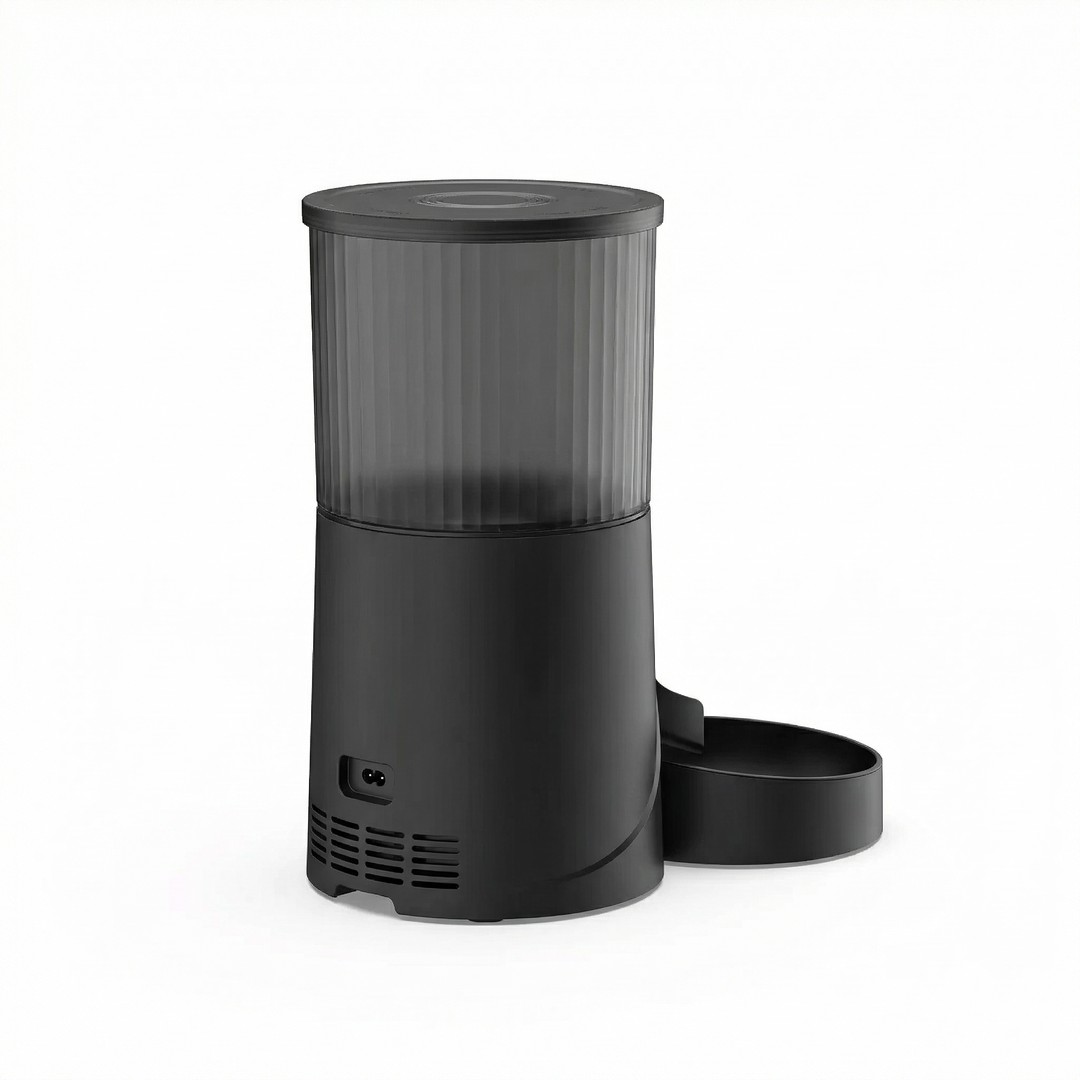
A "portion" on an automatic feeder is typically a mechanized unit of measurement (often ranging from 5 to 15 grams per rotation), not a standard U.S. cup.
Kibble size, shape, and density directly impact the actual weight and caloric value of an automated portion.
Upgrading to an Rfid Pet Feeder Portion system guarantees that specific, carefully measured meals are only accessible to the designated pet, preventing food theft.
Evaluating feeders requires looking beyond hopper capacity to examine minimum increment sizes, integrated scales, and microchip compatibility.
Understanding automatic feeders requires a shift in how we view meal sizes. Manufacturers do not program these devices to understand cups or nutritional calories. They program them to understand mechanical movement.
Most automatic dry food dispensers rely on a rotary impeller mechanism. Picture a wheel divided into several equal compartments. The feeder hopper funnels dry kibble down into these empty compartments. When the internal clock triggers a scheduled meal, the motor activates. The wheel turns one position. This single turn drops the contents of one compartment into the feeding bowl. In the language of automated feeders, this single compartment dump equals one "portion" or "unit."
Some models use a conveyor belt system instead. The motor runs the belt for a specific number of seconds to deliver a portion. You must understand this mechanical reality. You are not programming the machine to dispense 50 calories. You are telling it to rotate the wheel three times.
Volume-based dispensing creates a significant nutritional challenge. The physical compartment inside the feeder holds a fixed volume of space. However, kibble density varies wildly between brands and formulas. A dense, heavy kibble will pack tightly into the rotor slot. A lightweight, air-puffed kibble will fill the same volume but weigh much less.
Standardizing your pet's meals requires weighing the actual food output. You cannot trust the manufacturer's generic weight estimate. They base their estimates on average kibble sizes. If you switch food brands, the weight of a single machine portion will change. You must dispense one portion, capture it, and weigh it on a digital kitchen scale.
Kibble Type | Volume (Rotor Slot) | Actual Weight Dispensed | Estimated Caloric Impact |
|---|---|---|---|
Small, Dense Diet (e.g., Kitten Food) | 1 Slot | 12 grams | High (approx. 45 kcal) |
Standard Adult Maintenance | 1 Slot | 9 grams | Moderate (approx. 32 kcal) |
Large, Airy Diet (e.g., Dental Care) | 1 Slot | 6 grams | Low (approx. 20 kcal) |
Successful portion control requires consistent caloric output. Veterinary professionals use Body Condition Scores (BCS) to assess pet health. Managing feline obesity, canine diabetes, or renal disease requires strict adherence to a daily caloric limit. Even a 10% daily overfeeding can derail a weight loss plan over a month.
To succeed, you must translate your veterinarian's calorie recommendation into grams. Then, you divide those grams by the exact weight of one machine portion. This math gives you the correct number of mechanized units to program into the app. Precision creates predictability. Predictability leads to successful health outcomes.
Standard automated feeders work perfectly for single-pet homes. Multi-pet households face an entirely different reality. Food competition, grazing habits, and prescription diets complicate automated feeding.
A basic timed dispenser simply drops food into an open bowl. Any animal in the room can eat it. Dominant pets easily push submissive pets away from the bowl. Upgrading to microchip technology solves this vulnerability.
An RFID system features a motorized lid covering the food bowl. The lid contains an embedded radio-frequency identification scanner. When a pet approaches, the scanner searches for a matching microchip or collar tag. If the scanner reads an authorized ID, the lid retracts. When the pet steps away, the lid closes. This transforms a simple dispenser into a secure access terminal.
Access control allows owners to assign specific daily portion limits to distinct pets. You can place two identical smart feeders next to each other. You program Feeder A to open only for your senior cat. You program Feeder B to open only for your kitten.
The companion app manages these individualized meal profiles. The senior cat receives a kidney-support diet dispensed in tiny increments throughout the day. The kitten receives a high-protein diet in larger meals. Integrating an Rfid Pet Feeder Portion strategy ensures each animal receives their exact nutritional requirements without human intervention.
We must frame the RFID lid mechanism as a secure gateway. It actively protects measured portions from "grazers" or dominant pets. Some models feature side-shields or rear-covers to prevent a sneaky pet from eating over the authorized pet's shoulder.
This security eliminates the need to feed pets in separate rooms behind closed doors. You no longer have to supervise every meal. The hardware enforces the boundaries. By utilizing a professional Rfid Pet Feeder Portion setup, the designated pet learns they can eat their assigned portion in peace, while the greedy pet eventually learns they cannot breach the motorized lid.
Choosing the right hardware requires looking beyond basic hopper capacity. A massive food bin does not guarantee accurate feeding. You must evaluate the internal mechanics and sensor capabilities.
Granularity refers to the smallest amount of food the machine can dispense at one time. This metric is critical for small cats or toy dog breeds.
Standard gravity feeders or cheap automatic dispensers often use large minimum increments. They might dispense 1/4 cup (roughly 25-30 grams) per rotation. If your cat only needs 45 grams a day, you cannot split their meals effectively. High-precision models offer much smaller increments. Look for machines offering 5-gram or 1/12-cup minimum portions. This fine granularity allows you to program six or eight tiny meals daily, mimicking a cat's natural hunting and eating rhythm.
Premium automatic feeders incorporate built-in load cells beneath the feeding bowl. These integrated scales add a powerful layer of accuracy.
Basic feeders simply drop the scheduled portion regardless of what remains in the bowl. If a pet skips a meal, the next scheduled drop will pile on top, creating a surplus. Advanced models weigh the bowl's contents first. They subtract the uneaten residual food before dispensing the next scheduled portion. If the bowl already contains 10 grams of food, and the schedule calls for a 15-gram meal, the feeder will only dispense 5 grams. This prevents bowl overflows and keeps daily caloric intake strictly regulated.
Mechanical reliability relies heavily on kibble size and shape. Every manufacturer lists a maximum allowable kibble diameter. This usually ranges from 12mm to 15mm.
If you use kibble exceeding this limit, the rotor will jam. Furthermore, irregular shapes affect portion consistency. Perfectly spherical kibbles flow smoothly through the hopper chute. Flat discs, triangles, or cross-shaped pieces tend to interlock. This interlocking creates "bridges" inside the hopper, leaving the rotor empty. If the rotor spins empty, your pet misses a meal. Always check the machine's specific food handling capabilities against your chosen brand.
Dry food dispensing represents the majority of the market. However, many pets require wet or raw diets. You must distinguish between rotary dry dispensers and compartment-based feeders.
You cannot put wet food into a hopper system. It will spoil and ruin the motor. Wet food requires a carousel-style feeder. These devices feature an ice pack underneath a rotating tray holding several individual compartments. At scheduled times, the top cover rotates to expose one pre-portioned compartment. RFID versions of these carousel feeders operate similarly, opening the top cover only for the authorized microchip.
Follow these numbered steps when evaluating feeder hardware:
Check the minimum dispense weight (granularity).
Verify the maximum allowable kibble diameter against your current brand.
Determine if the device features an integrated load cell for residual weighing.
Confirm the lid closure speed to ensure it stops unauthorized pets quickly.
Automated hardware requires a financial investment. Understanding the long-term return on investment (ROI) helps justify the initial purchase price.
You will notice a stark price difference between basic feeders and microchip-enabled devices. Standard gravity bowls cost less than twenty dollars. Basic programmable timed dispensers range from fifty to eighty dollars. Advanced RFID-enabled feeders typically cost between one hundred and fifty to over two hundred dollars.
This higher initial price tag reflects the complex engineering. You are paying for microchip scanners, motorized lid actuators, load cells, and Wi-Fi connectivity. View this hardware not as a simple bowl, but as a veterinary management tool.
The clearest ROI comes from protecting expensive veterinary diets. Prescription foods for urinary crystals, kidney disease, or hypoallergenic trials cost significantly more than standard retail diets.
In a multi-pet home without access control, healthy pets inevitably eat the prescription food. You end up buying expensive clinical diets for animals that do not need them. By restricting access, the feeder pays for itself by reducing wasted prescription kibble.
Feeding Scenario | Prescription Food Wasted (Monthly) | Estimated Waste Cost (Monthly) | Annual Waste Cost |
|---|---|---|---|
Open Bowl (No RFID Control) | Approx. 3 lbs eaten by wrong pet | $25.00 | $300.00 |
RFID Access Control | 0 lbs | $0.00 | $0.00 |
*Note: A $200 smart feeder pays for itself in less than 8 months just in saved food costs.
Accurate portioning functions as preventative medicine. Obesity ranks among the most common preventable diseases in companion animals. Extra weight leads directly to osteoarthritis, cruciate ligament tears, and diabetes mellitus.
Treating a diabetic cat requires expensive daily insulin, specialized needles, and frequent veterinary blood curves. Managing osteoarthritis involves lifelong pain medication. By investing in hardware that guarantees exact portion control, you actively lower the risk of these metabolic disorders. The long-term savings on veterinary bills easily dwarf the upfront cost of the machine.
Purchasing the hardware only solves half the problem. You must successfully integrate the device into your home environment. Technology brings specific implementation risks.
Pets do not instinctively understand robotic feeders. The sudden mechanical whirring of a motor can frighten timid or skittish animals. A motorized lid abruptly opening near their face might cause them to run away.
You must manage the habituation phase carefully. Never force a frightened pet to use the device. Start by placing the new feeder next to their old bowl without turning it on. Next, place food in the new feeder but leave the lid permanently open. Let them get comfortable eating from the new shape. Finally, activate the motorized lid in a training mode that moves slowly. Patience ensures successful adoption.
Technical risks exist within the scanning hardware. The RFID antenna sits within the arch or rim of the feeder. It has a limited read-range, usually just a few inches.
If your pet's microchip migrated down their shoulder or back, the scanner might fail to read it. Furthermore, you must check microchip compatibility. Most modern feeders require standard 15-digit ISO microchips (134.2 kHz frequency). If your pet has an older, non-ISO chip, the feeder will not recognize it. In these cases, you must use a proprietary RFID tag attached to their collar. Collar tags work well, but pets can lose them, requiring you to buy replacements.
Smart devices rely on electricity and internet connections. If your home loses power, an open bowl remains accessible. A smart feeder without power traps the food inside.
You must address this dependency. Always utilize the device's battery backup compartment. Most units require three or four D-cell batteries. These batteries ensure the local memory retains the feeding schedule during an outage. The motor will still dispense portions, and the lid will still read microchips. However, during a Wi-Fi outage, the companion app will not send you push notifications. The machine will simply operate on its locally saved offline schedule.
Navigating the saturated market of pet tech requires a logical framework. Use these practical criteria to shortlist the best device for your specific household.
Start with your veterinarian's strict caloric recommendations. Convert those calories into total daily grams based on your specific kibble brand. Once you know the daily gram requirement, look at the feeder's minimum portion increment. Match the hardware capabilities to your pet's needs. If your cat needs 40 grams a day, a feeder dispensing 15-gram minimums forces you to feed 30 or 45 grams. You need a device with smaller increments to hit that 40-gram target precisely.
Before buying an access-controlled model, retrieve your pet's adoption paperwork or veterinary records. Locate their microchip number. Count the digits. Ensure it is a 15-digit ISO standard chip. If it is 9 or 10 digits, verify that the feeder brand includes an external collar tag in the box. Do not buy an expensive hub without knowing how it will read your animal.
The companion software acts as your control center. A poorly designed app ruins great hardware. Read user reviews specifically focusing on software stability.
Evaluate the interface for transparent portion tracking. Does it show a log of successful dispenses?
Check if the app provides real-time dispense alerts to your phone.
Look for models featuring infrared sensors in the hopper. These trigger low-hopper notifications, reminding you to buy more food before the machine runs empty.
Ensure the app allows multiple family members to log in and monitor the schedule simultaneously.
By auditing needs, verifying tech standards, and checking software stability, you eliminate buyer's remorse.
Understanding portions on an automatic feeder means bridging the gap between mechanical output and exact nutritional needs. A machine does not inherently know what your pet requires; it only knows how many times to spin its internal rotor. It is your responsibility to calibrate that mechanical action to match the specific weight and caloric density of your chosen kibble.
For multi-pet homes or those managing specialized diets, investing in RFID-driven portion control remains the most secure way to guarantee health outcomes. It solves the daily stress of food theft, prevents the expensive waste of prescription diets, and acts as a primary defense against obesity-related diseases.
As a final next step, before finalizing any hardware purchase, buy a digital kitchen scale. Measure the exact weight of a 1/8 cup serving of your current kibble. Knowing your food's baseline density will directly guide you in selecting a feeder with the appropriate internal dispensing granularity.
A: It varies significantly by manufacturer and kibble density. A single portion typically ranges between 5 to 15 grams per mechanical unit. The internal rotor size dictates the physical volume, so a dense kibble will weigh more per portion than a lighter, airy kibble.
A: While some centralized, hub-based systems can manage individual profiles from one large unit, most standard setups require a dedicated RFID feeder per pet. Having a separate device for each animal ensures precise, individualized dry food dispensing without cross-contamination.
A: Most standard automatic feeders dispense strictly by volume, counting the rotations of an internal wheel. However, premium RFID models often incorporate load cells (integrated scales) beneath the bowl for true weight-based portioning and residual food calculation.
A: Quality smart feeders feature local memory and battery backup compartments, typically using D-cell batteries. This ensures that pre-programmed portions still dispense on time and motorized lids continue to read microchips during power or Wi-Fi outages.


