
English 


Views: 0 Author: Site Editor Publish Time: 2026-09-28 Origin: Site


Upgrading clinic infrastructure requires balancing capital expenditure against daily operational efficiency. You must prioritize staff ergonomics and patient safety simultaneously. A subpar exam or surgical table creates severe workflow bottlenecks. It compromises sterile fields during critical procedures. Poor equipment increases physical strain on veterinary technicians. This often leads to preventable workplace lifting injuries. You need reliable hardware.
This guide provides a vendor-agnostic framework for evaluating your options. You will learn to select an appropriate Elevated Pet Operating Table based on your caseload. We cover surgical requirements and clinic footprints. You will discover how to match hardware specs to real-world clinical demands.
The choice between hydraulic and electric mechanisms dictates installation requirements and long-term maintenance costs.
Tabletop configuration (Flat vs. V-Top) must align strictly with your primary use case (general exams vs. complex surgical procedures).
Real-world weight capacity assessments must account for dynamic loads (struggling animals), not just static weight claims.
Choosing the right core mechanism drives your entire clinic workflow. You must evaluate electric and hydraulic systems based on your facility layout. Each system offers distinct operational advantages. They also carry specific environmental vulnerabilities. Veterinary hospitals must match the mechanism to the intended treatment room.
Electric models utilize an actuator-driven system. Operators achieve smooth ascent and descent via a floor-mounted foot pedal. These units rely on direct electrical grid connections.
Pros: They provide highly precise height adjustments. Clinicians face zero fluid leak risks. Electric motors generally ensure quieter operation. This quiet movement reduces anxiety in nervous animals during routine triage.
Risks: You must install them near grounded electrical outlets. Overloaded motors face severe burnout risks. Excessive moisture exposure damages internal circuitry. Wet dental procedures demand careful water management around electric bases.
Hydraulic systems rely on fluid-pressure dynamics. Technicians operate them manually via a foot-pump. Some models incorporate an electrical assist mechanism to pressurize the fluid.
Pros: Hydraulic systems offer extreme durability in wet environments. Fully manual versions operate independently of power grids. They handle heavy static loads exceptionally well. Mobile clinics heavily favor manual hydraulic bases.
Risks: Hydraulic seals degrade over time. Failed seals cause messy fluid leaks on clinic floors. Valve failures may trigger sudden table drops. This poses massive safety risks during delicate surgeries. Regular seal inspections remain non-negotiable.
The surface of your Elevated Pet Operating Table determines its clinical versatility. Different procedures demand specific patient positioning. You cannot use a single surface type for every medical intervention. General exams require different fluid management than abdominal surgeries. We outline the three primary surface architectures below.
Table 1: Tabletop Surface Configuration Comparison
Surface Type | Primary Clinical Application | Key Evaluation Feature |
|---|---|---|
Standard Flat-Top | General triage, routine exams, minor outpatient procedures | Marine-edge (raised lip) design |
V-Top (Adjustable) | Orthopedic, abdominal, prolonged surgical procedures | Central trough and directional drainage bucket |
Heated Table Tops | Preventing hypothermia in anesthetized patients | Independent temperature controls and sensor failsafes |
Flat-top surfaces serve as the workhorse for general veterinary practice. You will use these for triage, vaccinations, and routine physical exams. They accommodate minor outpatient procedures easily.
Evaluation Note: Look for marine-edge designs. A marine edge features a slightly raised lip around the perimeter. This lip contains fluid runoff. It prevents urine or spilled antiseptics from reaching the floor. It keeps your workspace sanitary.
V-Top surfaces feature two adjustable longitudinal panels. Clinicians angle these panels to cradle the patient. You need this surface for orthopedic repairs and deep abdominal explorations. The V-shape stabilizes the animal's spine.
Evaluation Note: Assess the central hinge mechanism closely. Poorly designed hinges trap biological debris. The design must feature a central trough. It also needs a directional drainage bucket to capture surgical fluids safely.
Anesthesia impairs an animal's ability to thermoregulate. Heated table tops prevent dangerous hypothermia during prolonged operations. The stainless steel surface warms evenly to maintain core body temperatures.
Evaluation Note: Verify the presence of independent temperature controls. You must ensure the system includes sensor failsafes. Malfunctioning heating elements cause severe tissue burns on anesthetized patients. Reliable thermal regulation protects your patients.
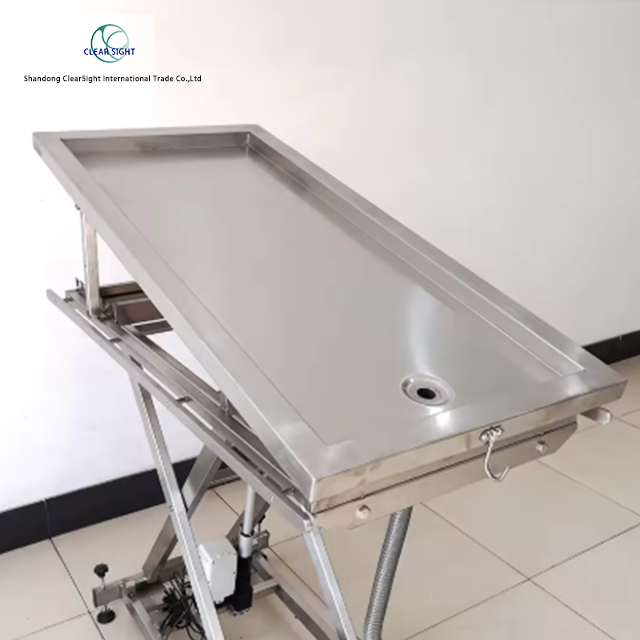
Purchasing an Elevated Pet Operating Table requires strict scrutiny of material specifications. Marketing brochures often highlight aesthetic features. You must ignore superficial designs. Focus strictly on structural integrity, load capacities, and ergonomic footprints.
Require Type 304 Surgical-Grade Stainless Steel: Lower-grade steels rust quickly under harsh chemical exposure. Type 304 stainless steel resists corrosion from biological fluids and potent disinfectants. It provides a truly sterile operating field.
Verify Steel Gauge Thickness: Steel gauge measures material thickness. Lower gauge numbers indicate thicker, heavier metal. You want a low-gauge tabletop. Thin metal warps over time. It creates a loud "oil-canning" popping sound when heavy breeds step on it. This noise terrifies anxious animals.
Standard capacity claims usually represent static weight. A table might hold 250 lbs of stationary sandbags. It might fail under a 150 lb struggling Mastiff. You must ensure the table handles high dynamic loads.
Animals resist restraint. They multiply downward force through kinetic movement. Ensure your chosen table explicitly rates for 250+ lbs of dynamic load. This capacity accommodates large, thrashing breeds safely without bowing the central support column.
Clinician safety matters just as much as patient safety. Your equipment must support healthy posture for your veterinary staff. Poor ergonomics lead to chronic back pain.
Height Range: The minimum drop height remains critical. Ideal low-profile tables drop to 10–12 inches off the floor. This allows giant breeds to walk directly onto the surface. It eliminates manual lifting injuries entirely.
Base Style: Manufacturers utilize Z-base or X-base designs. Z-base structures provide excellent knee clearance. Seated surgeons slide their legs under the table easily. X-base structures often block seated access but offer superior vertical stability.
Integrating new heavy equipment disrupts clinical operations temporarily. You must plan for physical installation logistics. Furthermore, you need strict protocols for cleaning and preserving the equipment. Ignoring maintenance degrades mechanical components rapidly.
Always measure doorway clearances before ordering pre-assembled units. Many high-capacity surgical tables arrive fully welded. They will not fit through standard 36-inch clinic doors. You might need to remove door frames.
Determine cord management strategies for electric models early. High-traffic trauma rooms feature multiple rolling carts. Exposed electrical cords create massive tripping hazards. Route cables safely under protective floor covers or select ceiling-drop power sources.
Veterinary clinics rely on harsh chemical disinfectants. Products containing accelerated hydrogen peroxide or bleach eliminate pathogens effectively. However, they aggressively degrade inferior metals and exposed lift actuators.
Assess accessibility for deep cleaning. Moving parts trap biological matter. Track systems for V-top hinges collect blood and fur. You must easily dismantle these sections. Daily sanitation prevents cross-contamination between surgical patients.
Equipment failures halt clinical revenue immediately. You must heavily scrutinize the vendor's warranty terms. Manufacturers usually separate warranty coverage. They offer different terms for actuators and steel frames.
Verify domestic availability of critical replacement parts. You need fast access to replacement foot pedals. You must source hydraulic seals locally. Waiting weeks for international shipping causes unacceptable equipment downtime. Ensure your vendor provides robust regional support.
No single Elevated Pet Operating Table fits every veterinary business model. You must map the hardware directly to your primary caseload. Overspending on unnecessary features drains clinic resources. Underspending compromises medical capabilities. Follow these distinct practice profiles to narrow your choices.
High-Volume Spay/Neuter Clinics: Speed and reliability drive your operation. Prioritize rapid electric height adjustment mechanisms. Select standard flat tops for quick patient turnover. Demand ultra-durable foot pedals. Your staff will actuate the lift dozens of times daily.
Specialty Surgical Centers: Complex procedures demand advanced positioning. You absolutely require V-Top surfaces. Heated options remain non-negotiable for multi-hour orthopedic repairs. Focus on units offering ultra-low minimum heights. This accommodates heavy, sedated orthopedic patients safely.
Mobile / Tight-Space Practices: Floor space represents your highest premium. Focus on wall-mounted fold-up units. These tables fold flat against the wall when not in use. Alternatively, choose narrow footprint hydraulic models. They operate perfectly without tethering to wall outlets.
Next Steps: Request detailed product specification sheets from shortlisted vendors. Confirm exact stainless steel grades in writing. Require direct references from similarly sized veterinary practices. Speak to their technicians about real-world usability before you issue a formal purchase order.
Purchasing an elevated pet operating table constitutes a multi-year investment in staff retention and surgical efficacy.
Bypass marketing fluff by basing your final decision strictly on steel quality, mechanism reliability, and base ergonomics.
Ensure your selected tabletop architecture aligns exactly with your daily clinical workflows.
Call-to-Action: Request a consultation or download our technical spec comparison sheet to evaluate top-tier veterinary tables for your practice today.
A: Ideal low-profile tables should reach down to 10 to 12 inches. This low clearance allows giant breeds to walk directly onto the table. It eliminates manual lifting and protects staff from severe back injuries.
A: Most heated and electric lift tables run on standard 110V/120V outlets. However, operating multiple heated tables on a single shared circuit may cause breaker trips. Check your clinic's electrical load capacity beforehand.
A: With daily clinic use, hydraulic seals typically require careful inspection and potential replacement every 3 to 5 years. This timeframe depends heavily on maximum load frequency and adherence to daily wipe-down routines.
A: They require more meticulous cleaning due to internal hinges and central fluid troughs. You must select models featuring removable drainage pans and fully sealed hinge joints to maintain proper infection control.


