
English 


Views: 0 Author: Site Editor Publish Time: 2026-05-19 Origin: Site


Safely restraining a dog during grooming requires a delicate balance. We must manage canine behavioral realities while ensuring human ergonomic safety. Reliance on outdated physical force increases liability for everyone involved. Unstable equipment escalates these risks rapidly. Groomers face severe back strain, while dogs risk devastating spinal injuries. Effective restraint is never about total immobilization. Instead, it relies on clinical handling techniques. We pair these strategies with proper infrastructure to calm the animal. This combination effectively minimizes the "Fight, Flight, Freeze, or Fawn" (4F) stress responses. In this comprehensive guide, you will learn how to read early canine stress signals. We will explore clinical lifting standards to protect your physical health. You will also discover why upgrading your hardware transforms salon safety. By the end, you will understand how modern restraint ecosystems protect your pet, your professionals, and your business.
Up to 78% of dogs experience grooming anxiety; recognizing early stress signals (yawning, whale eye) prevents dangerous panic attacks.
Clinical guidelines dictate that any dog over 15kg requires a two-person lift or mechanical assistance to prevent human and pet injury.
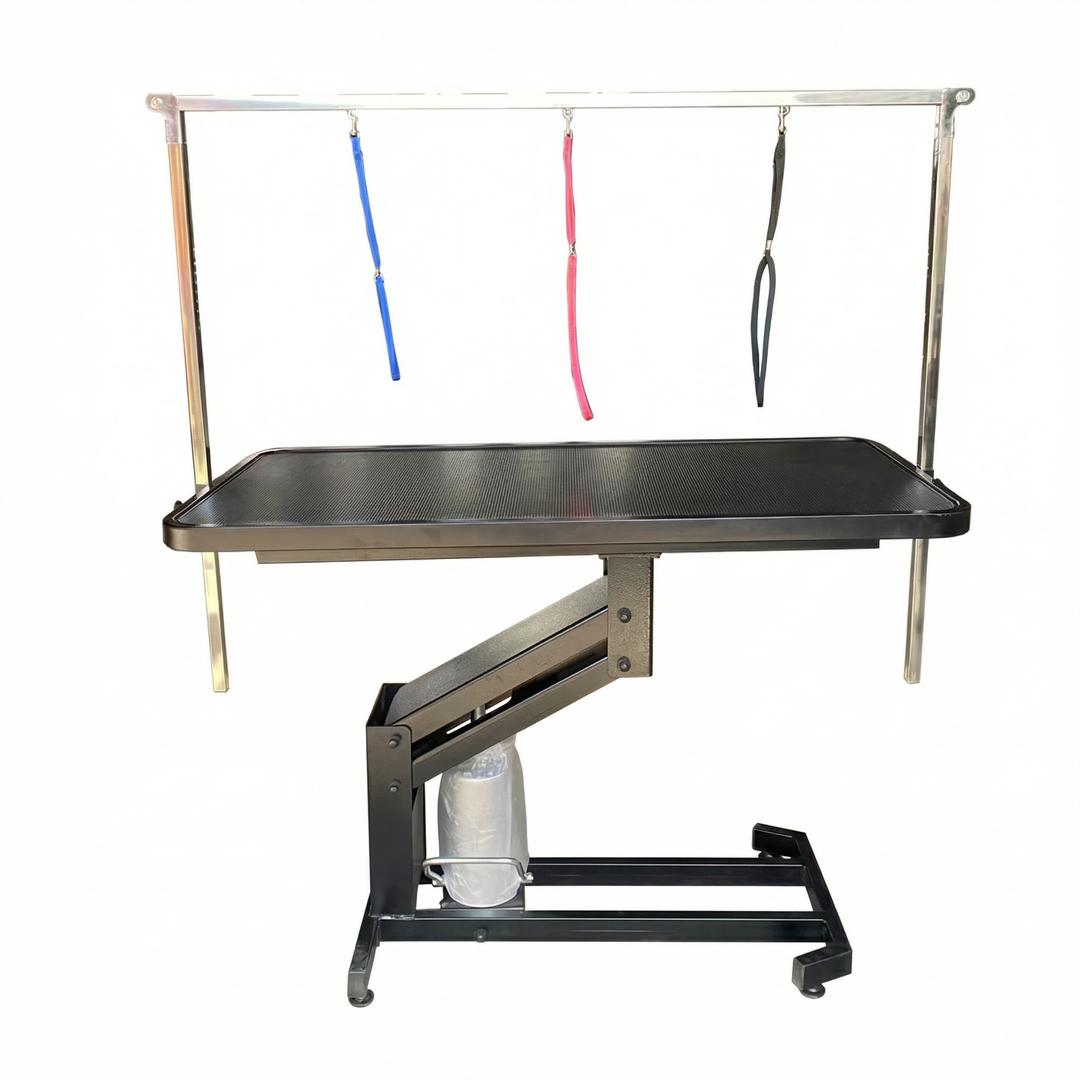
Upgrading to a Safe Pet Handling Hydraulic Grooming Table eliminates risky manual lifting and provides the stable foundation necessary to reduce canine "flight" triggers.
Hardware restraints must prioritize safety over convenience—rigid double-loops and fixed belly bands pose severe physiological risks compared to quick-release alternatives.
The ROI of high-end restraint equipment is measured in reduced liability claims, fewer canceled appointments, and extended groomer career longevity.
Many handlers misinterpret aggression or escape attempts as bad behavior. In reality, these actions represent predictable neurological responses. Dogs face overwhelming sensory input during grooming sessions. When they feel trapped, their brains activate the 4F model. They will fight, flee, freeze, or fawn. Understanding this biology is your first line of defense. You cannot train away a neurological reflex. You must manage the environment to prevent the reflex from triggering.
Dogs rarely bite or thrash without warning. They emit subtle micro-signals right before a struggle begins. You must watch for non-thermal panting. If the room is cool but the dog pants heavily, panic is building. Yawning is another critical indicator. Dogs yawn to self-soothe, not just when tired. Trembling and pacing indicate an imminent flight response. Finally, look for the "whale eye." This occurs when a dog turns its head but keeps its eyes fixed on you. The whites of the eyes become highly visible. Recognizing these signs allows you to pause before danger strikes.
Veterinary clinical standards advocate for the minimum effective restraint. Less restraint often yields better compliance. Over-restraining a nervous dog rapidly escalates their panic. When you pin a dog down forcefully, you trigger a life-or-death fight response. We must aim for positional guidance rather than rigid immobilization.
Common Mistake: Ignoring early warning signs often leads to severe bites. Never push through a grooming session if the dog exhibits whale eye or stiffens completely.
Stress Response | Observed Behavior | Recommended Action |
|---|---|---|
Fight | Snapping, growling, lunging, showing teeth | Pause immediately. Assess for physical pain. |
Flight | Scrambling, jumping, pulling away forcefully | Lower the table. Provide secure, non-slip footing. |
Freeze | Rigid body, holding breath, refusing to bend | Use calm tones. Avoid forceful pushing or bending. |
Fawn | Excessive licking, cowering, rolling over | Build confidence slowly. Reward small steps. |
Protecting your physical health is paramount in the grooming industry. Clinical veterinary standards establish a strict 15kg lifting threshold. You must never lift a dog exceeding 15kg entirely alone. Solo lifting of heavy breeds increases the risk of dropping the pet. It also leads to severe human joint strain. Following this rule extends your career longevity and protects the animal from sudden falls.
When you must lift a dog manually, proper form prevents injury. You should never bend at the waist. Always utilize a deep-squat manual lift. Follow these essential steps for ergonomic safety:
Stand directly next to the dog.
Bend your knees into a deep squat, keeping your back straight.
Place one arm securely around the neck or head base.
Place your second arm under the rear abdomen, close to the hind legs.
Pull the dog tightly against your torso.
Lift upward steadily using your leg muscles.
Effective handling requires precise physical positioning. For a standing restraint, secure the head using one arm. This prevents sudden bites. Place your other arm under the abdomen. Gently pull the dog toward your center of gravity. This technique offers support without causing panic.
Sometimes you need lateral recumbency, or side-lying restraint. Reach over the dog's back. Grasp the lower limbs closest to the table. Slowly slide the dog down against your body. Holding the legs closest to the table prevents upward thrashing. This method keeps both the handler and the pet completely safe.
You must know when to abandon solo restraint. Aggressive or highly reactive pets require the "Four Hands" rule. Bring in a second handler immediately. One person manages the head and provides emotional comfort. The second person completes the grooming task safely. Pride has no place in pet safety. Always ask for help when a dog panics.
Many groomers rely on temporary setups. Folding tables and DIY elevated surfaces present massive safety risks. These unstable platforms trigger the canine "flight" response. Dogs possess highly sensitive paws. They feel microscopic shifts in the table's surface. Poor traction and micro-movements convince the dog they are falling. This perceived instability causes them to scramble, jump, or bite. A secure environment requires absolute structural rigidity.
Manually lifting large or senior dogs violates safety protocols. It terrifies the animal and damages your spine. A Safe Pet Handling Hydraulic Grooming Table directly addresses the 15kg lifting rule. This specialized equipment lowers completely flush to the floor. Large breeds simply step onto the surface naturally. You then elevate the table smoothly using foot controls. This eliminates all risky manual lifting. It also preserves the dog's dignity and joints.
You must evaluate grooming hardware against strict clinical criteria. Aesthetic appeal matters little compared to functionality.
Stability and Weight Capacity: The frame must support giant breeds perfectly. It cannot shift or sway during a physical struggle.
Textured Non-Slip Surfacing: The tabletop needs high-friction materials. This critical feature provides dogs with a sense of secure footing.
Smooth Actuation: The hydraulic mechanism must operate quietly. Jerky movements or loud motor noises cause auditory startle responses. Fluid vertical lifting keeps the dog calm.
Safety Feature | Static / DIY Folding Table | Hydraulic Grooming Table |
|---|---|---|
Structural Stability | Shifts and wobbles under weight | Rock-solid steel frame prevents swaying |
Floor Access | Requires dangerous manual lifting | Lowers flush to the floor for easy entry |
Surface Traction | Often smooth, causing slips | Rubberized, textured grip prevents sliding |
Height Adjustment | Fixed, forcing poor human posture | Adjustable for perfect ergonomic alignment |
The grooming industry still utilizes outdated, dangerous tools. Rigid double-head loops represent a severe hazard. These devices restrict the dog's visual field entirely. They also lock the neck in an unnatural position. When a dog panics and thrashes, rigid loops spike their fear. Worse, they risk causing permanent tracheal or spinal damage.
Fixed belly bands pose equally severe physiological risks. Some handlers use them to force exhausted dogs to stand. If a dog drops its weight suddenly, the fixed band acts as a tourniquet. It can cause internal bleeding or organ rupture. It will rapidly aggravate hidden tumors or severe arthritis. You should ban these rigid restraints from your salon entirely.
Modern grooming requires hardware prioritizing physiological safety. You must upgrade your restraint tools to match modern veterinary insights.
Quick-Release Mechanisms: Emphasize equipment featuring magnetic buckles or quick-release clips. If a dog experiences a severe panic episode, you must detach them instantly. A quick-release prevents strangulation.
No-Sit Haunch Holders: These tools support the rear gently. They guide the dog into a standing position without painful upward compression.
Padded Support Slings: Senior dogs suffer from joint degradation. You should use sling-style belly supports featuring heavy foam padding. This distributes the body weight safely and prevents localized tissue damage.
You cannot force a frightened dog to accept restraints immediately. You must build positive associations through progressive exposure. Outline a protocol for new or anxious clients. Start with 3 to 5 short sessions. Keep each session under 30 seconds. Place the dog on the equipment, offer high-value rewards, and let them leave. This micro-exposure teaches the dog the environment is safe. It overrides previous traumatic memories associated with grooming salons.
Physical restraint works best when paired with sensory reduction. Salons generate overwhelming noise. High-velocity dryers frighten even well-adjusted pets. Pair your physical handling with noise-muffling ear hoods, such as Ear Buddies. Reducing auditory chaos prevents sudden thrashing. When the dog cannot hear the high-pitched motor, their heart rate drops. This makes your physical restraint job significantly easier.
Dogs possess an incredible ability to read human emotions. Handler frustration is highly contagious. If you feel angry or rushed, the dog will panic. You must maintain calm, assertive energy at all times. Strategic equipment setup also plays a crucial role. Gather all your clippers and brushes before securing the pet. Dogs will actively exploit small "escape windows." If you step away to grab a comb, they will attempt to jump. Preparedness prevents opportunity.
Many salon owners hesitate to purchase premium safety hardware due to the initial cost. However, you must frame this purchase as an essential insurance policy. High-end tools like the Safe Pet Handling Hydraulic Grooming Table act as a safeguard against catastrophic accidents, protecting your reputation and reducing potential veterinary bills. Proper hardware also transforms daily efficiency, allowing you to process more dogs per day safely while reducing physical exhaustion.
Proper hardware transforms your daily efficiency. Manual lifting causes physical fatigue by noon. Wrestling with anxious dogs slows down your grooming schedule. Hydraulic tables and quick-release systems eliminate this daily struggle. They reduce physical exhaustion entirely. Consequently, you can process more dogs per day safely. This operational scalability directly increases your monthly revenue.
Your business depends on healthy employees. Back and shoulder injuries plague the grooming industry. Reducing these injuries protects your bottom line. It lowers your workers' compensation premiums significantly. Safe environments also ensure staff retention. Groomers stay longer at salons prioritizing their physical health.
You should take immediate action to secure your salon. Start by auditing your current restraint equipment today. Identify any rigid loops or fixed belly bands for immediate disposal. Phase out all static folding tables. We strongly recommend upgrading your primary workstations. Investing in a Safe Pet Handling Hydraulic Grooming Table meets all modern safety standards. It protects your livelihood and ensures canine comfort.
Best Practice: Schedule bi-annual equipment reviews. Check hydraulic fluid levels and inspect quick-release buckles for wear. Preventive maintenance prevents tragic accidents.
Safe restraint operates as a complete ecosystem. It requires a foundational understanding of dog behavior and stress triggers. You must pair clinical handling techniques with a calm, methodical demeanor. Furthermore, you need the right physical infrastructure to support these efforts safely. Relying on brute force remains an outdated, high-risk strategy. Upgrading to professional-grade hardware changes everything. Specifically, hydraulic lifting systems and quick-release loops offer ultimate protection. Implement these changes today to protect the pet, the professional, and the long-term success of your business.
A: This reaction is almost always a "Fight" response. It typically triggers due to a slippery surface, hidden joint pain, or restricted breathing. Improper grooming loops cause extreme panic. Always assess the physical environment first. Ensure the dog has secure footing and comfortable, pain-free restraints.
A: Clinical veterinary guidelines dictate a strict 15kg maximum. Anything heavier requires a two-person lift or mechanical assistance. Utilizing a hydraulic table is the safest method. This practice protects human spinal health and prevents dangerous canine falls.
A: No. Fixed belly bands present severe dangers for dogs with arthritis or spinal issues. They also threaten dogs with hidden internal inflammation. Sudden drops in weight can cause organ ruptures. You should exclusively use heavily padded, quick-release alternatives only when absolutely necessary.
A: You must immediately release the tension on the loop. Assess the dog for unnoticed pain. Switch to a "four hands" manual handling approach with a partner. You should also lower the hydraulic table directly to the floor. This resets the dog's center of gravity safely.


