
English 


Views: 0 Author: Site Editor Publish Time: 2026-07-14 Origin: Site


Selecting the right surgical equipment goes far beyond fulfilling a basic clinical checklist. It acts as a critical investment in surgical precision, surgeon ergonomics, and overall patient safety. Veterinary practices continually expand their surgical offerings today. Standard examination tables quickly turn into clinical bottlenecks. Complex canine orthopedics and prolonged abdominal procedures demand stable, highly adjustable surfaces. Outdated surgical setups increase risks for both the canine patient and the veterinary surgical team.
This guide provides practice managers and veterinary surgeons an evidence-based evaluation framework. You will learn how to procure the right Pet Operating Table based on actual clinical realities. Marketing claims often obscure daily practical needs. We will cover surface architecture, lifting mechanisms, material standards, and load dynamics. By the end, you can make an informed choice matching your clinic's true operational demands.
Surface Architecture: V-top configurations are non-negotiable for complex canine procedures requiring lateral support, while flat-tops offer cost-effective versatility for high-volume soft tissue work.
Mechanism Trade-offs: Electric lifting columns provide micro-precision and hands-free operation; hydraulic systems offer off-grid durability but introduce long-term seal maintenance risks.
Material Standards: True clinical longevity requires 304-grade stainless steel to withstand constant exposure to biological fluids and harsh sterilants.
Load Dynamics: A surgical table must support a dynamic load of at least 250 lbs to safely accommodate giant dog breeds during physical manipulation, without base instability.
A high-quality surgical surface fundamentally changes how your clinic operates. Upgrading an outdated platform directly impacts three core areas: surgeon health, patient outcomes, and daily throughput.
Veterinary surgeons often perform multiple procedures daily. Prolonged canine surgeries easily cause severe lumbar strain. Height-adjustable tables reduce this physical toll. Surgeons can elevate the patient to an optimal working level. Tilting capabilities allow better visibility into deep abdominal cavities. This ergonomic support directly improves surgeon endurance. Focused surgeons make fewer errors during complex procedures.
Deep-chested dog breeds face unique risks under anesthesia. Improper anatomical positioning restricts their respiration. A modern Pet Operating Table utilizes secure tie-down cleats. These cleats keep the animal stable during surgical manipulation. Secure placement prevents intraoperative complications. Reliable positioning tools mitigate clinical liability. Your team can confidently focus on the surgical site instead of stabilizing the patient.
Turnover time between surgeries dictates daily clinic revenue. Efficient fluid management shortens room cleaning significantly. Built-in drainage troughs channel fluids away quickly. Rapid-tilt mechanisms help staff wipe down surfaces in seconds. Upgrading your equipment accelerates the entire turnover process. Faster turnovers support higher clinic throughput and better scheduling.
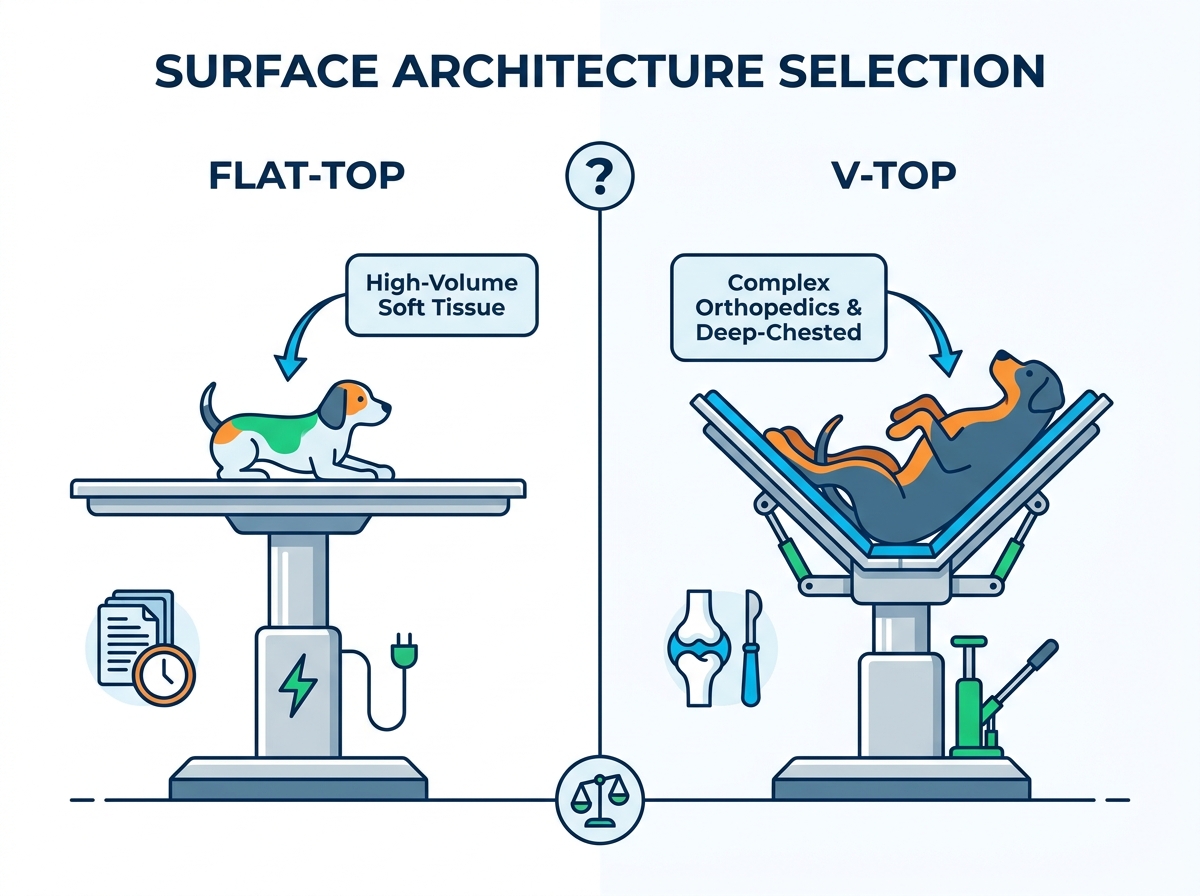
Surface architecture determines how well you can stabilize different canine anatomies. Clinic managers must choose between flat-top and V-top designs based on their specific caseloads.
Flat-top surfaces provide an excellent baseline for many clinics. They offer straightforward utility and easier sanitation.
Optimal Use Cases: These surfaces work perfectly for high-volume spay and neuter clinics. Routine soft tissue surgeries thrive on flat platforms. Smaller dog breeds remain stable without complex adjustments.
Skeptical Lens: Flat surfaces struggle during advanced procedures. Maintaining spinal alignment becomes difficult. Barrel-chested dogs often roll laterally. Surgeons must use numerous surgical sandbags to stabilize the patient. Excessive sandbags clutter the surgical field and complicate sterility.
V-top configurations solve the stabilization problems inherent in flat surfaces. They securely cradle the patient during lengthy operations.
Optimal Use Cases: V-tops are essential for complex orthopedic surgeries. Spinal operations require strict anatomical alignment. Deep abdominal canine surgeries benefit from the lateral support V-tops provide.
Evaluation Criteria: Look for independent, dual-panel adjustments. Panels should typically adjust between 0 and 45 degrees. The hinges must operate smoothly under heavy loads. Avoid mechanisms prone to locking when exposed to biological fluids.
Understanding technical specifications prevents costly procurement mistakes. Evaluate lifting columns, weight capacities, and alloy grades carefully.
The method used to elevate the table affects daily usability and long-term maintenance.
Electric Systems: Modern electric columns provide smooth, pedal-operated micro-adjustments. Hands-free operation keeps the surgical field sterile. Surgeons can adjust the height mid-procedure seamlessly. Risk factor: They rely entirely on continuous power availability. Actuators and motors eventually require replacement. Always analyze warranty coverage on electrical components.
Hydraulic Systems: Hydraulic pumps offer extreme robustness. They function perfectly without nearby power outlets. Mobile clinics often prefer hydraulic setups. Risk factor: Hydraulic fluid leakage remains a persistent threat. Pump seals degrade over a 5 to 10-year horizon. Replacing hydraulic seals demands specialized maintenance.
Mechanism Type | Primary Benefit | Core Vulnerability | Ideal Clinic Setting |
|---|---|---|---|
Electric Column | Hands-free micro-adjustments | Motor burnout, power reliance | Specialty & high-volume surgical centers |
Hydraulic Pump | No electricity required, highly durable | Seal degradation, fluid leaks | Rural practices & mobile vet units |
Veterinary tables endure aggressive physical forces. A table holding a static weight might fail during active surgical manipulation.
Static vs. Dynamic Weight: Static weight simply measures resting capacity. Dynamic weight accounts for movement. A 150 lb Mastiff requires significant repositioning. Your Pet Operating Table must remain completely stable during these dynamic shifts. Demand a dynamic load rating of at least 250 lbs.
Footprint Design: The base design dictates stability and surgeon comfort. Z-base and X-base designs prevent tipping during heavy lateral loads. Pedestal designs offer excellent under-table foot clearance. Proper foot clearance prevents surgeons from kicking the base during delicate maneuvers.
Surgical environments are highly corrosive. Constant exposure to blood, urine, and harsh chemical sterilants destroys inferior metals rapidly.
Alloy Grading: Always demand 304-grade or 316-grade stainless steel. These alloys resist oxidation and chemical wear. Cheaper alloys pit and rust quickly. Rust harbors dangerous bacteria and violates clinical sterilization protocols.
Drainage Architecture: Assess the slope of the integrated table trough. Fluids must channel naturally toward the drain. The drainage aperture must be sufficiently wide. Narrow apertures clog easily from blood clots or tissue fragments. Ensure the collection bucket attaches securely to the frame.
Purchasing the equipment is only the first step. Proper installation and diligent maintenance determine the true success of your investment.
Surgical suites often contain limited floor space. Map out the true footprint required before purchasing. Account for the table's maximum tilt ranges. Measure the highest and lowest lift ranges. You must leave adequate room for anesthesia machines. Ensure surgical lighting arcs do not collide with elevated table panels.
Advanced tables require rigorous daily maintenance. Biological buildup easily freezes V-top hinges. Implement strict standard operating procedures (SOPs). Veterinary technicians must clean tracks and hinges daily. Accumulated debris causes mechanical binding. Proper cleaning prevents costly emergency repairs.
Equipment procurement involves several peripheral expenses. Heavy surgical tables incur high freight shipping costs. Installation often requires professional calibration for electric lifting columns. Factor in the future price of original equipment manufacturer (OEM) replacement parts. Off-brand motors frequently fail prematurely.
Navigating supplier catalogs feels overwhelming. Use a structured decision framework to shortlist the best equipment for your specific practice.
Caseload Mapping: Align the purchase with your primary revenue driver. A high-volume general practice benefits immensely from a durable flat-top. Conversely, specialty surgical centers require fully electric V-top models. Do not overbuy features you rarely use.
Warranty Auditing: Scrutinize the warranty terms carefully. Instruct buyers to separate the frame warranty from the mechanism warranty. Frame warranties often span a lifetime. Motor and pump warranties usually expire after one to three years.
Vendor Vetting: Never purchase blindly from an online brochure. Recommend requesting clinical peer references. Ask vendors for demo units whenever possible. Test the mechanism smoothness yourself. Inspect the material finish for rough edges before committing.
A pet operating table represents a decade-long investment. It directly influences the safety of canine patients and the physical well-being of your surgical team. Cutting corners on load capacity or material grades ultimately harms clinical efficiency. Practice managers should audit their current surgical bottlenecks immediately. Identify instances of surgeon fatigue or patient positioning struggles. Use the outlined technical criteria to request highly specific quotes from veterinary equipment suppliers. Prioritize ergonomics, stability, and high-grade stainless steel to elevate your surgical standard of care.
A: Heated surfaces help prevent hypothermia during prolonged canine surgeries. This clinical benefit improves recovery times significantly. However, heated tables add upfront costs and introduce potential electrical element failures. If your budget is constrained, high-quality alternative warming blankets provide effective, low-risk thermal support.
A: A high-quality stainless steel frame easily lasts 10 to 15 years. Electric actuators and motors typically require replacement after 5 to 7 years. Strict preventative maintenance dictates the actual longevity. Daily cleaning of tracks and hinges prevents motor strain.
A: While possible when laid completely flat, it is not recommended. V-top mechanisms add unnecessary complexity to basic exam rooms. They require significantly more cleaning time. The hinged tracks trap hair and debris. Reserve V-top tables strictly for dedicated surgical suites.


