
English 


Views: 0 Author: Site Editor Publish Time: 2026-05-19 Origin: Site


Pet owners desperately want convenience and uninterrupted sleep. They often turn to technology for help. Meanwhile, veterinarians prioritize strict portion control and daily health monitoring. These differing priorities create a core tension between human comfort and optimal pet care. The veterinary consensus is clear. Vets do recommend automated feeding systems. However, they view them strictly as medical and behavioral management tools. They are not substitutes for human supervision.
This article provides an evidence-based framework for evaluating these smart devices. You will learn how to separate true clinical benefits from critical risks. We will explore obesity management techniques alongside the dangers of masked illness or equipment failure. You will also discover the necessary hardware requirements for success. By the end, you will know exactly how to transition your furry friend to a smart schedule safely.
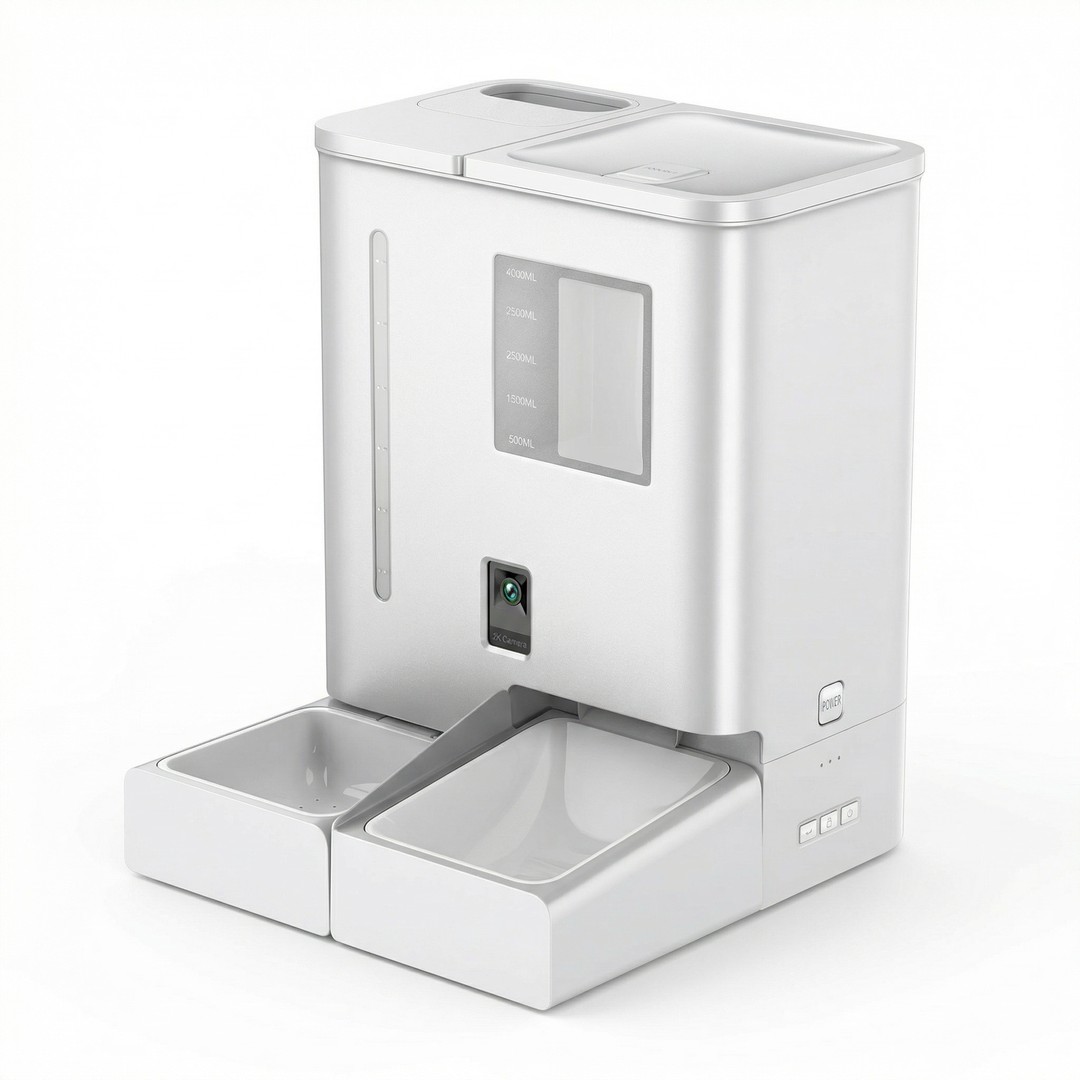
Clinical Success: Precision feeders drastically improve weight-loss outcomes (up to 83.2% success in multi-pet homes) compared to manual feeding.
Behavioral Shift: Automated systems break the "human = food" association, effectively stopping 4 AM wake-ups and begging behaviors.
Tech-Enabled Precision: Utilizing a Pet Feeder Automatic Wifi allows for granular remote adjustments, ensuring medical-grade caloric restriction is maintained.
Hardware Requirements: A medical-grade setup requires anti-jam technology, battery backups, and non-porous bowls (stainless steel/glass) to prevent skin infections.
Automated feeding addresses several clinical challenges directly. The primary advantage is eliminating human error. We love our pets deeply. We often show this love through food. This emotional connection creates a dangerous cycle of overfeeding. Overpour happens when you skip measuring and simply fill the bowl. Double feeding happens in busy households. One partner feeds the dog. The other partner wakes up later and feeds them again. A machine removes these errors entirely.
Consistent portioning: Machines do not feel guilt when a pet begs.
Centralized control: The device acts as the single source of truth for daily intake.
Dietary discipline: Automation enforces boundaries humans struggle to maintain.
Another major clinical benefit is managing "scarf and barf" syndrome. Many pets eat too rapidly. Dry kibble enters the stomach and expands. The stomach stretches too fast. Receptors trigger immediate regurgitation. The most effective physical solution is dividing the daily intake. You can easily create 5 to 6 micro-meals. Manual feeding makes this impossible for working adults. Automation makes it effortless. It reduces gastrointestinal overload and stops the vomiting.
Data strongly supports technology-assisted weight management. The Association for Pet Obesity Prevention (APOP) reports nearly 60% of cats are overweight. Obesity leads to diabetes and severe osteoarthritis. Clinical studies show humans frequently fail at strict diets. We give in to begging behaviors. Technology-assisted feeding removes emotion from the equation. The machine dispenses exact calories daily. Adherence to strict caloric restriction improves drastically.
Finally, these systems provide a powerful psychological redirection. Veterinarians call this the "focal shift" effect. Traditionally, pets associate you with food. They harass you when hungry. Once you introduce a machine, their focus shifts. They associate the dispenser with food. They learn to guard the machine rather than harass the owner. This focal shift lowers anxiety for the pet. It also brings peace to the entire household.
Not all devices meet veterinary standards. You must evaluate hardware based on strict clinical criteria. Portion precision is the most critical metric. Investing in a Pet Feeder Automatic Wifi model is critical for remote micro-adjustments. App integration allows you to alter meal sizes from your office. You can dispense a tiny 1/8-cup "snack mode" via your smartphone. This prevents you from overfeeding them manually when you get home.
Fail-safe mechanisms are non-negotiable for risk mitigation. Power outages happen unexpectedly. Starvation is a severe risk during long shifts. You must require a dual-power supply. The unit needs an AC adapter and a backup battery. Motorized anti-jam technology is equally vital. If kibble blocks the chute, the motor must reverse automatically. This clears the jam and prevents missed meals.
Hygiene directly impacts pet health. Material safety is a common failure point. Plastic bowls are a massive medical red flag. Plastic develops micro-scratches easily. These scratches harbor dangerous bacteria. This bacteria causes painful feline acne on the chin. You must require detachable, dishwasher-safe components. Stainless steel or tempered glass are the only acceptable materials for daily use.
Multi-pet homes require advanced identification features. A standard WiFi feeder drops food into a single bowl. This creates chaos if you have three cats. The dominant cat will steal the food. Microchip-activated systems solve this completely. They scan the pet's RFID collar or implanted microchip. The lid only opens for the designated pet. This prevents "food bullying" and safely isolates expensive prescription diets.
Feature Category | Standard Consumer Grade | Medical-Grade Standard |
|---|---|---|
Portion Control | Dial or basic timer | App-controlled micro-adjustments |
Power Supply | Wall plug only | Dual-power (AC + Battery Backup) |
Bowl Material | Standard Plastic | Stainless Steel or Glass |
Access Control | Open bowl | Microchip / RFID activated lid |
While automation solves many problems, it introduces new dangers. Skeptical veterinarians warn about total cost of ownership and severe limitations. You must implement mitigation strategies to use these tools safely.
Masking Early Disease Signals: A functioning machine does not equal a healthy pet. If food piles up unnoticed, you miss critical signals. Anorexia is often the first indicator of systemic illness. You must check the bowl daily to verify they actually ate.
The "Pet Sitter" Fallacy: Never use automated feeders to leave pets unattended for days. This is highly dangerous. A machine will not call the vet. It cannot detect a sudden urinary blockage. Medical emergencies require daily human observation.
Behavioral Fallouts in Multi-Pet Homes: Standard single-bowl feeders trigger aggressive "food guarding". If one cat claims the machine, the other starves. You must deploy multiple units or use microchip access to prevent territorial aggression.
Portion Drift over Time: Auger-style mechanisms deviate over time. They might drop a few extra kibbles per rotation. This drift compounds over weeks. It can easily derail a strict feline weight-loss plan. You must recalibrate the machine monthly.
Implementation realities change drastically based on your pet's diet. You must categorize solutions correctly to avoid food safety hazards.
Dry kibble systems are the most common. They are ideal for highly programmable, high-frequency micro-meals. They handle large volumes of food easily. However, there is a major warning here. Owners must retain the original kibble bag. Do not throw it away after filling the hopper. You need it to track expiration dates. You also need the exact lot numbers in case of a factory recall.
Wet food systems operate differently. They usually feature carousel-style rotary designs. You face strict limitations on freshness here. Wet food spoils rapidly at room temperature. The maximum safe duration is 6 to 8 hours. This applies even with built-in ice packs. These systems also significantly increase your daily cleaning burden. You must wash the carousel compartments thoroughly every single day.
We must reiterate the ultimate red flag. Veterinarians strictly ban non-mechanical "gravity feeders" for dry food. These are simply dangerous "calorie ATMs". They dispense food continuously as the pet eats. They offer zero portion control. They guarantee weight gain and should never be used for daily nutrition.
System Type | Best Used For | Freshness Limit | Primary Drawback |
|---|---|---|---|
Dry Kibble Auger | High-frequency micro-meals | Weeks (in sealed hopper) | Portion drift over time |
Wet Food Carousel | Moisture-rich prescribed diets | 6-8 hours maximum | High daily cleaning burden |
Gravity Dispenser | Water only (Never food) | N/A | Causes severe obesity |
Buying the equipment is only the first step. Post-purchase success requires a strategic rollout. You cannot simply plug it in and walk away.
The phased introduction is critical. Pets often fear new objects. A giant machine appearing overnight causes severe stress. They might go on a dangerous food strike. You must run the automated unit alongside their traditional bowl. Do this for 3 to 5 days. Let them inspect it safely. Let them realize the machine provides their favorite resource.
Audio conditioning accelerates acceptance. Leverage voice-recording features if available. Record a cheerful phrase like "Time to eat!" Alternatively, rely on the mechanical hum of the motor. They hear the gears turning and run to the kitchen. The sound establishes a predictable routine. Predictability drastically lowers feline anxiety.
Calibration testing ensures medical accuracy. Do not trust the manual blindly. When setting up your Pet Feeder Automatic Wifi, grab a digital kitchen scale. You must manually measure the first 10 dispenses. Weigh the kibble in grams. Divide the total by 10 to find the exact portion weight. Ensure the machine’s unit aligns exactly with your vet’s caloric prescription. Adjust the app settings until the math is perfect.
Automatic feeders are highly recommended by veterinarians when used correctly. You must treat them as precision health instruments rather than tools for owner negligence. They excel at weight management and behavior modification. They fail when used to replace daily human supervision.
Your next steps involve assessing your specific household needs. We highly recommend selecting a Pet Feeder Automatic Wifi for its remote monitoring and calibration capabilities. Shortlist devices based on non-porous bowl materials and anti-jam reliability. Finally, commit to monthly recalibration to ensure your pet stays on their healthy track.
A: Categorically no. Using a machine as a weekend sitter poses severe risks. Mechanical failures or power outages can cause starvation. More importantly, you risk missing sudden undetected medical emergencies. Conditions like urinary blockages require immediate human intervention to prevent fatal outcomes.
A: Yes, it is highly effective for this issue. The machine transfers the food association from the human to the predictable dispensing schedule. Your cat learns that waking you yields nothing. They will eventually choose to wait patiently by the machine instead.
A: It entirely depends on the model. Diabetic pets require exact gram-weight accuracy for insulin pairing. You must perform strict manual calibration of the dispensing mechanism using a digital scale. Standard auger mechanisms may experience portion drift, requiring frequent output verification.
A: No, unless you are using a specialized rotary wet-food feeder. Semi-moist food causes severe mechanical jamming risks in standard auger systems. It also creates rapid spoilage issues. It will stick to the internal chutes, harbor bacteria, and put your pet's health at risk.


