
English 


Views: 0 Author: Site Editor Publish Time: 2026-06-03 Origin: Site


The transition from legacy halogen fixtures to modern LED lighting is now standard across clinical environments. This shift brings undeniable advantages in efficiency and illumination quality. However, the market is currently saturated with overlapping feature claims. This complexity complicates equipment evaluation for facility managers and clinicians alike. Over-specifying features leads to wasted resources and unnecessary structural complexity. Conversely, under-specifying compromises clinical visibility and directly impacts diagnostic accuracy. You need a clear, objective way to navigate these diverse options.
Our goal here is to provide a vendor-agnostic, evidence-based framework. This guide helps you evaluate a Surgical Examination Lamp based purely on clinical outcomes. We focus heavily on performance reliability and physical implementation realities. You will learn how to parse critical metrics like color rendering and shadow management effectively. Finally, we provide a step-by-step logic. This logic maps exact clinical scenarios to appropriate equipment configurations safely and securely.
Context Dictates Specs: The line between minor surgical lights and standard examination lamps is defined by specific Lux thresholds and shadow-reduction capabilities.
Beyond Brightness: Color Rendering Index (CRI)—specifically the R9 value for red tissue—is often a more critical metric than maximum illumination intensity.
Infrastructure Constraints: Mounting configurations dictate feasibility; ceiling-mounted systems require rigorous structural load assessments that are often overlooked in initial budgeting.
True Lifespan: Vendor claims of "50,000-hour LED life" rely heavily on the fixture's thermal management capabilities, making heat dissipation a primary evaluation metric.
You must clarify the functional bridge between standard diagnostic lights and major operating room overheads. A Surgical Examination Lamp is uniquely engineered. Manufacturers design them specifically for minor procedures, ER trauma bays, and intensive care units. These intense environments demand much more than ambient room lighting. Practitioners require highly focused beams to navigate localized anatomical structures safely. Standard room lights scatter beams too widely to penetrate deep cavities.
Contrast the Lux requirements carefully when evaluating options. Standard exam lights typically hover around 30,000 to 50,000 Lux. This level suits basic surface diagnostics well. However, surgical examination systems must deliver 70,000 to 100,000+ Lux consistently. This higher intensity is non-negotiable for deeper work. It adequately illuminates deep, localized cavities. Light intensity naturally drops as it travels further into a physical cavity. Starting with a higher base Lux ensures sufficient photons reach the targeted tissue.
Always verify strict compliance with accepted international standards. Highlight the absolute necessity of verifying IEC 60601-2-41 compliance. This vital regulation dictates stringent safety and performance baselines. It applies specifically to surgical and diagnostic luminaires globally. Compliance ensures the fixture manages electrical safety securely. It also governs electromagnetic compatibility and safe optical radiation limits. Never bypass this verification step during your initial evaluation phase.
Feature Category | Standard Examination Light | Surgical Examination Lamp |
|---|---|---|
Lux Intensity | 30,000 – 50,000 Lux | 70,000 – 100,000+ Lux |
Typical Application | Surface checks, general triage | Minor surgery, deep cavity exams |
Shadow Dilution | Minimal (Single source common) | High (Multi-lens arrays standard) |
Regulatory Standard | General medical electrical | Strict IEC 60601-2-41 compliance |
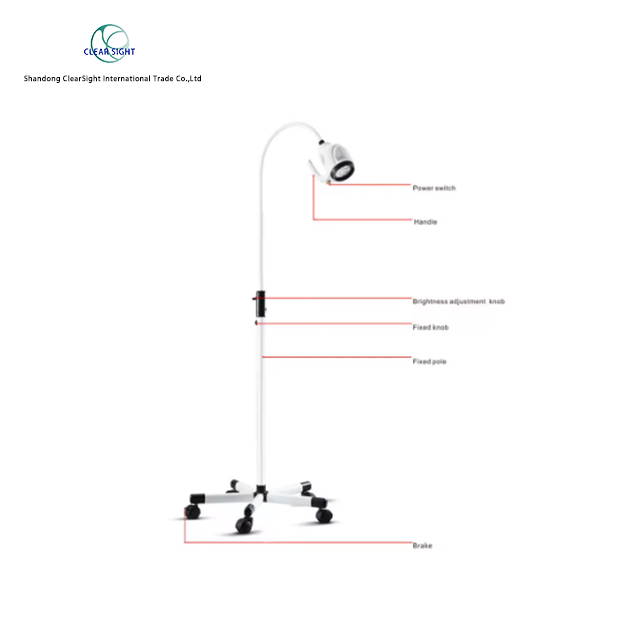
Evaluate the overall adjustability of the main light head. Look specifically for seamless dimming capabilities. High-quality fixtures offer ranges from 10% to 100%. They achieve this broad range without causing visible flickering. They also prevent the color temperature from shifting during the dimming process. Consistent illumination prevents surgeon eye fatigue during extended use. Sudden drops in light quality disrupt visual concentration severely. Smooth dimming transitions accommodate changing procedural needs instantly.
Assess fixed versus variable color temperatures. Ideal clinical ranges fall between 3,500K and 5,000K. Variable control allows practitioners to adjust lighting dynamically. They can select warmer or cooler lighting depending on the tissue type. High-contrast vascular work benefits immensely from cooler light. Cooler light helps outline subtle vein structures clearly. Conversely, basic dermal exams might require a warmer spectrum. Warm light helps clinicians assess subtle skin tones and rashes accurately.
We must clearly deconstruct standard CRI (Ra) versus the specific R9 metric. Standard CRI calculates an average across eight pastel colors. It often ignores deeply saturated reds completely. Warn your team against lamps featuring high overall CRI but low R9. The R9 metric specifically measures the rendering of saturated red colors. Accurate red rendering is absolutely critical. It allows clinicians to distinguish between arteries, veins, and varying states of tissue hypoxia safely. Misinterpreting red shades leads to severe diagnostic errors.
Compare single-source reflector designs directly against multi-lens matrix arrays. Multi-lens systems are vastly superior for complex medical procedures. They define the modern standard for shadow dilution today. A high-quality Surgical Examination Lamp must maintain clear visibility continuously. It must perform flawlessly even when a practitioner's head or hands partially block the light field. Overlapping beams from multiple angles eliminate central dark spots entirely.
Always test the light beam against a deep, non-reflective anatomical model.
Dim the unit to 50% and observe if the color spectrum shifts noticeably.
Place a physical obstruction near the focal point to measure shadow dilution.
Verify the specific R9 value on the manufacturer's technical data sheet.
Detail the necessity of robust unistrut backing. Structural realities dictate mounting feasibility entirely. Ceiling mounts require precise, documented weight-bearing calculations. A long suspension arm exerts significant torque on the mounting plate. Structural failure poses severe physical safety risks to staff and patients.
Discuss the vital importance of internal suspension arm mechanics. Low-quality friction joints lead directly to positional "drift." This drift often occurs mid-procedure. The lamp head slowly moves out of its intended alignment. Drift remains a major point of clinical frustration today. High-quality spring-tensioned arms prevent this drift entirely. They hold the light head exactly where the surgeon places it.
Evaluate caster quality rigorously for mobile variations. Base weight distribution is critically important here. Assess the overall physical footprint carefully. You must prevent tipping in high-traffic clinical spaces. A low center of gravity ensures safe transport between active trauma bays.
Assess the inclusion of integrated lithium-ion battery backups. This feature is vital for busy ambulatory surgical centers. It is equally important for geographic areas prone to power instability. Evaluate the lifecycle and capacity of these batteries. Ensure they provide sufficient runtime during sudden facility power transfers. Reliable backups prevent workflow interruptions during delicate procedures.
Scrutinize the lamp head's internal design closely. Differentiate clearly between passive and active cooling mechanisms. Modern LEDs do not project infrared heat directly onto the patient. However, the internal circuit boards generate intense heat constantly. Poor heat sinks degrade internal LED output prematurely. Reliable thermal management ensures consistent illumination over long periods. Heat dissipation remains a primary evaluation metric for validating true operational lifespan claims.
Evaluate the physical external housing meticulously. Look for smooth, IP-rated surfaces. The ingress protection rating indicates resistance to liquids and dust. The exterior design must lack exposed screws or deep joining seams. These features allow the fixture to withstand harsh chemical wipe-downs. Strict infection control protocols demand seamless, easy-to-clean profiles. Rough surfaces harbor dangerous pathogens over time.
Look well past the initial installation phase. Calculate the ongoing logistical maintenance requirements accurately. Consider the management of proprietary replacement sterile handles. Anticipate potential mechanical arm recalibration needs over the years. Review warranty limitations on sensitive internal power supply components. Understanding these maintenance realities ensures continuous operational readiness. It prevents unexpected downtime that disrupts daily clinical schedules.
Follow a structured process to narrow down your available options.
Step 1: Map the Clinical Scenario: Document the exact procedures performed in your facility. Consider dermatology, minor plastics, dental, or ER trauma. This specific step determines the absolute baseline Lux required. It also dictates the necessary mounting requirements for the space.
Step 2: Audit the Physical Space: Involve facility management extremely early in the process. Confirm exact ceiling heights quickly. Check for any drop-ceiling constraints. Verify structural integrity thoroughly before finalizing a form factor. Ignoring structural limits causes severe installation delays.
Step 3: Mandate a Clinical Trial: Never finalize an acquisition based solely on spec sheets. Request a physical demo unit immediately. Test the unit for mechanical arm drift in real time. Assess maneuverability around existing bulky equipment. Check the housing for excessive heat emission after two hours of continuous use.
Step 4: Verify Warranty Coverage: Demand absolute clarity on what the warranty covers exactly. Separate the LED board, the mechanical suspension arm, and the power supply. Ensure the guaranteed rapid availability of critical replacement parts. Robust warranties indicate strong manufacturer confidence in their engineering.
We must summarize the critical shift in the modern procurement mindset. Move away from simply acquiring the brightest light available. Instead, invest your time in finding the right balance of specific features. Prioritize color accuracy, precise shadow control, and long-term structural reliability. A well-chosen Surgical Examination Lamp enhances diagnostic confidence significantly. Encourage your evaluation team to cross-reference facility constraints carefully. Match these physical realities with the specific R9 and shadow-dilution metrics of your shortlisted vendors. Complete these steps before requesting formal proposals. Rigorous evaluation ensures long-term clinical success and uninterrupted daily operations.
A: The primary differences lie in Lux intensity and shadow control capabilities. Standard exam lights hover around 30,000 to 50,000 Lux for basic surface checks. A minor Surgical Examination Lamp delivers 70,000 to 100,000+ Lux. It utilizes complex multi-lens arrays to penetrate deeper procedure cavities without casting intrusive shadows.
A: The R9 value specifically measures the accurate rendering of saturated red colors. This metric correlates directly to rendering red blood and tissues correctly. High R9 values prevent clinical misdiagnosis. They allow surgeons to distinguish clearly between arteries, veins, and varying states of tissue oxygenation.
A: Vendors often rate LEDs for 40,000 to 50,000 hours. However, the actual lifespan depends heavily on the fixture's thermal management. High-quality heat sinks and efficient power drivers prevent premature degradation. Poor heat dissipation will significantly shorten the true operational life of the LEDs.
A: Retrofitting is sometimes feasible but requires rigorous structural evaluation. LED fixtures feature different weight distributions than legacy halogen units. You must assess wiring compatibility and suspension arm torque thoroughly. Facilities frequently need new structural backing and unistrut adjustments to handle modern fixtures safely.


