
English 


Views: 0 Author: Site Editor Publish Time: 2026-07-18 Origin: Site


Modern veterinary practices face a constant, stressful dual challenge. You must maximize patient throughput in highly constrained clinic spaces. At the same time, you must protect your clinical staff from severe ergonomic injuries. Industry standards now reflect a massive shift away from static stainless-steel islands. Dynamic, height-adjustable solutions quickly dominate modern clinic design. Selecting the exact right equipment requires a highly careful approach. Choosing a reliable Pet Elevating Examination Table means balancing your initial budget carefully against strict Fear Free compliance. It also requires factoring in long-term mechanical durability. In this detailed guide, we explore how height-adjustable tables drive daily workflow efficiency. You will learn how to accurately evaluate stability metrics, surface materials, and internal lift mechanisms. We will show you exactly how to avoid costly over-specification. You will learn to ensure your facility rolls out these new clinical assets safely.
Ergonomics drive ROI: Transitioning to a pet elevating examination table significantly reduces staff lifting injuries and worker's compensation claims.
Mechanism matters: Electric lift systems offer smoother, quieter operation to reduce patient anxiety compared to older hydraulic systems, though hydraulics often present lower upfront costs.
Space dictates design: Integrated storage (drawers) and wall-mounted folding options are critical for practices with exam rooms under 100 square feet.
Material standards: True clinical durability requires 304-grade stainless steel; lower grades risk pitting and corrosion from harsh disinfectants.
Clinic profitability relies heavily on staff retention and physical safety. Lifting dogs over 40 lbs takes a massive physical toll over time. Veterinary technicians frequently suffer severe lumbar back strain. You should frame height-adjustable tables as a vital staff retention tool. They are never merely a basic operational expense. When you actively protect your team’s health, you reduce costly employee turnover. You also minimize expensive worker’s compensation claims.
Patient experience matters equally in modern veterinary medicine. Adopting Fear Free practices requires adapting the room environment to the animal. You can lower an adjustable table completely down to the floor. Large or highly anxious dogs simply step onto the surface naturally. This floor-level boarding minimizes their instinctive startle reflex. It stops the frantic physical struggle before an exam even begins. Happy, relaxed patients always mean happier, loyal clients.
Workflow efficiency improves drastically across your entire building. Quick-adjust mechanisms let a single technician prep a patient alone. Older static tables usually required two staff members just for routine lifting. Freeing up a second technician accelerates your clinic throughput immediately. They can run important bloodwork instead. They can discharge another waiting patient. Efficiency transforms directly into higher daily appointment volume.
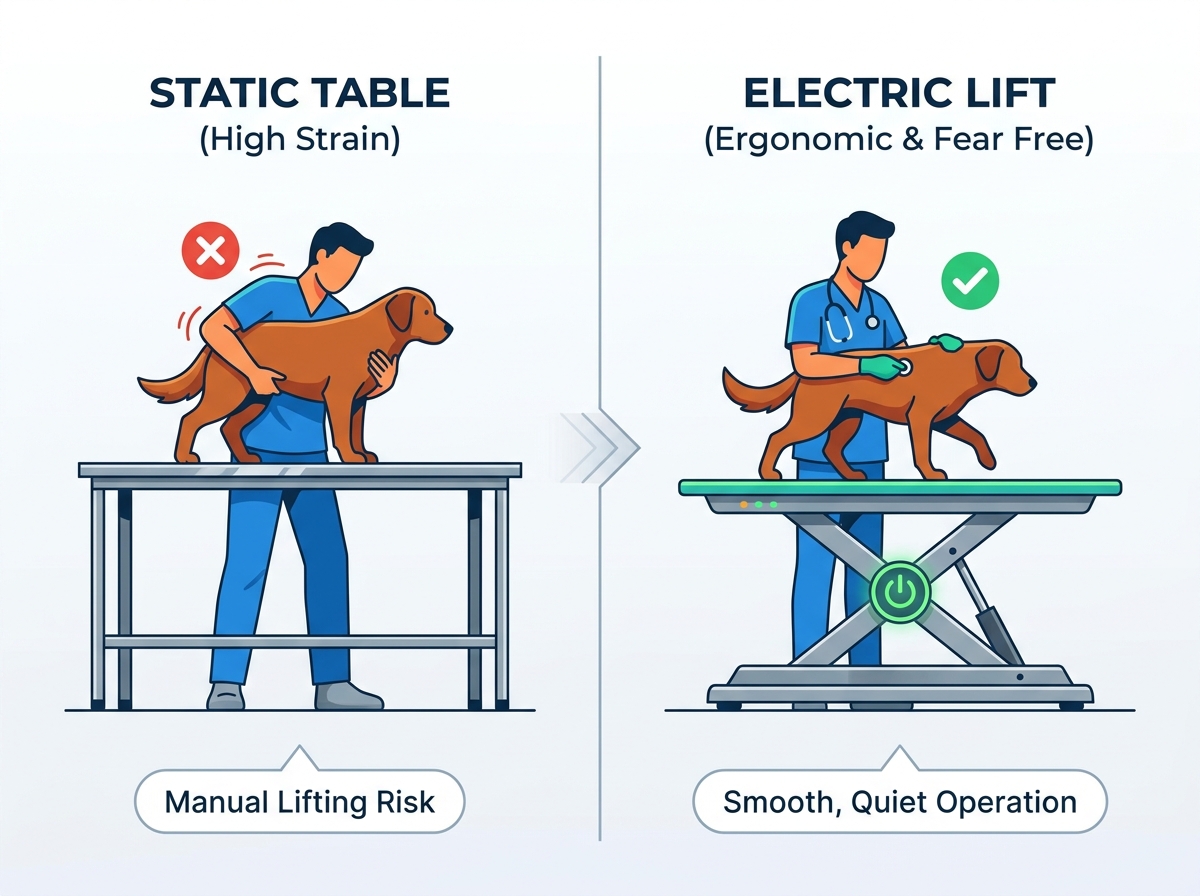
Selecting proper clinic furniture means matching the design to the specific room function. We categorize these essential solutions into three distinct groups. You must evaluate your available square footage before making any purchases.
A high-quality Pet Elevating Examination Table excels primarily in your main exam rooms. They are absolutely ideal for busy large breed practices. They perfectly serve aging pet demographics facing joint mobility issues. Focus your specific selection on the base design. Scissor-lift bases provide extreme structural stability at lower heights. Pedestal bases offer much easier foot movement for the examining veterinarian. Pedestals can sometimes show minor stability differences when fully extended upward.
These models fit best in highly constrained clinic spaces. Tiny rooms require rapid access to essential medical supplies. You can store syringes, otoscopes, and bandaging materials right inside the table drawers. The major trade-off is the absolute lack of vertical height adjustment. Staff members must still bear the heavy lifting burdens daily.
These smart designs save incredible amounts of valuable floor space. They work best for multi-use spaces or rapid triage areas. Feline-only exam rooms benefit greatly from wall-mounted units. Heavy lifting is rarely required for cat appointments. Their primary limitation involves significantly lower weight capacities. They also demand strict structural mounting requirements inside your clinic walls.
Follow this logic to match tables to your rooms:
Assess the room square footage and available floor space first.
Identify the primary patient demographic entering that specific room.
Match the mechanical base style to the expected staff traffic flow.
Verify exact wall stud placements if considering a folding unit.
Manufacturers actively market many impressive features. You must cut through the noise to find real value. Evaluating these bold claims ensures your clinic gets truly lasting equipment.
Never just look at the maximum static weight number. A 250 lb static rating means very little during an active physical exam. You must evaluate actual dynamic stability instead. Does the table wobble heavily when a 100 lb mastiff shifts its body weight? Test the physical table at its maximum extended height. Rigidity at the highest point matters most for staff confidence.
Require authentic 304-grade stainless steel for all flat surfaces. This specific steel alloy withstands daily exposure to harsh bleach. It resists quaternary ammonium compounds perfectly. Lower metal grades often pit or corrode quickly under clinic conditions. Look for raised marine edges. These raised lips contain dangerous fluids seamlessly. Built-in surface drainage helps manage nervous accidents or minor medical procedures easily.
Electric lifts need strong internal moisture protection. Check the IP rating carefully before buying. High ingress protection ratings ensure foot pedals survive daily floor mopping. Hydraulic systems face entirely different mechanical threats. Assess the actual risk of hazardous fluid leaks. Hydraulic fluid seals naturally degrade over a standard five-year lifespan.
Feature Evaluated | Standard Requirement | Why It Matters for Clinics |
|---|---|---|
Steel Grade | 304-Grade Stainless | Prevents pitting from daily chemical disinfectants. |
Edge Design | Marine Edge (Raised Lip) | Keeps urine and fluids from spilling onto floors. |
Pedal Protection | IPX4 Rating or Higher | Protects electric motors from mop water damage. |
Load Testing | Dynamic Load Rating | Ensures zero wobble when large breeds move suddenly. |
Clinic managers often over-specify equipment during new builds. We see this expensive mistake happen frequently. Understanding room specific needs prevents you from draining your equipment budget.
A primary wellness exam room absolutely does not need a surgical table. Over-spending here drains your available capital needlessly. Save your premium dollars for the actual sterile surgical suite. Standard wellness checks require fast turnover, not complex animal positioning.
Exam models strictly feature smooth flat tops. They prioritize very quick height adjustments. They focus heavily on scale integration and highly approachable bases. Surgery tables look and operate very differently. They feature complex V-tops for exact longitudinal tilt. They boast manual lateral tilt capabilities. You will find tie-down cleats and central fluid troughs everywhere. These specialized features actively hinder a standard canine wellness exam. Toes can easily pinch in the V-top gap during standing exams.
Sometimes a smart middle-ground option makes perfect sense. A dedicated treatment table usually includes a shallow wash sink. This layout works perfectly for messy triage situations. Use treatment tables in central prep areas rather than standard client-facing exam rooms. They handle minor wound flushing and dental prep beautifully.
Buying the equipment is only half the total battle. Rolling it out across your busy facility presents unique operational risks. Proper planning prevents installation headaches.
Electric elevating tables require safely accessible floor outlets. Alternatively, they need extremely safe surface cable management. Trip hazards from poorly routed power cords instantly negate any staff safety benefits. Plan your cord routes carefully before unboxing the unit. Floor trenching provides the best permanent solution. Heavy-duty rubber cord covers offer a decent temporary fix.
Scissor lifts move vertically but expose dangerous moving parts. They can pinch clinic debris easily. They can even pinch tails or paws if not properly shielded. Always specify rubber bellows to cover the scissor mechanism. Enclosed pedestal bases hide all moving mechanical parts safely. They offer much easier daily floor cleaning. However, pedestals may demand slightly larger static floor footprints. Map out the exact base dimensions on your floor using tape.
Advanced electronic tables require consistent preventative upkeep. Integrated digital scales demand strict annual recalibration. Missing this vital step leads to highly inaccurate medication dosing. Lifting motors require periodic internal lubrication. Establish a realistic ongoing maintenance schedule immediately. Practice managers must strictly budget time for these vital routine checks.
Follow these quick maintenance best practices:
Sweep all dog hair away from the base mechanism daily.
Wipe the stainless top down between every single patient appointment.
Check the power cord for accidental bite marks weekly.
Test the dynamic stability at maximum height monthly.
Making your final equipment choice requires highly practical logic. Balance your clinic budget by matching specific tables to specific rooms. Invest heavily in at least one heavy-duty adjustable table. Place this premium unit directly in your primary large-dog room. Use stationary or storage models for feline rooms instead. This diverse mix optimizes both clinic function and your available capital.
For your immediate next steps, take swift action. Audit your current exam room square footage today. Check the exact physical placements of your existing floor outlets. Request specific motor warranties from your medical suppliers. Always secure these technical details before requesting formal price quotes.
A: A reliable clinic table should hold a minimum of 200 lbs safely. Heavy-duty models can support up to 300 lbs. This higher capacity easily accommodates giant dog breeds. Ensure the base remains completely stable at maximum height when supporting these heavy weights.
A: Electric tables use a motorized linear actuator. They operate smoothly and quietly but require a nearby electrical outlet. Hydraulic tables use fluid pressure for lifting. They are often powered by a manual foot pump. Hydraulics need no outlet but can feel jerky and risk eventual seal leaks.
A: Yes, they are highly valuable for high-volume clinics. Weighing the pet simultaneously during the physical exam saves a major step in the lobby. It significantly reduces patient stress. Just remember it adds a mechanical point requiring annual calibration.
A: Keep the entire base clear of ambient hair and clinic debris. Wipe down all stainless surfaces using non-abrasive, vet-safe disinfectants. Strictly avoid pooling water near the foot pedals and electrical housings. Lubricate moving joints annually per the manufacturer guide.


